Monsoon Car Care Guide for Faridabad: Protect Your Car From IMT Acid Rain, Yamuna Flooding & Rust
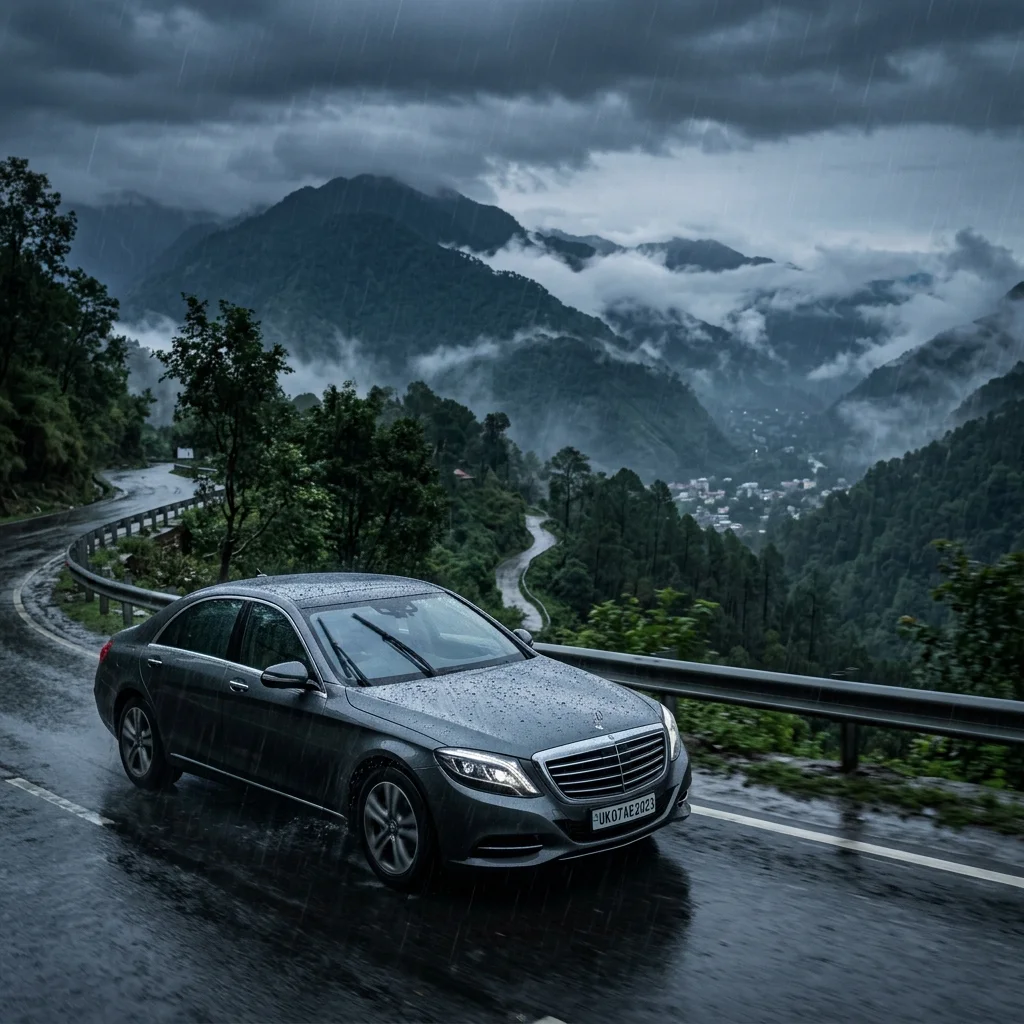
If you own a car in Faridabad, you are living through what is quietly one of the harshest monsoon environments for a vehicle in the entire NCR. Not because of rainfall volume alone — Delhi sees similar amounts. The difference is what falls with that rain. Faridabad is home to IMT — the Industrial Model Township — one of Haryana's largest and most concentrated manufacturing zones, packed with textile mills, auto component factories, electroplating units, and chemical processing plants. Every monsoon, these facilities emit sulfur dioxide and nitrogen oxide that dissolve into passing rain clouds and fall on your car as mild sulfuric and nitric acid. On top of that, Faridabad's eastern border runs along the Yamuna floodplain, and sections of NH-19 through Old Faridabad and Ballabhgarh flood so reliably every year that locals plan around them. This guide tells you exactly what is happening to your car and what to do about it.
IMT Faridabad spans thousands of acres of industrial land concentrated between NH-19 and the Aravalli foothills. During the monsoon, clouds moving northeast from the Rajasthan border pass directly over this corridor before releasing rain onto residential Faridabad — sectors like NIT, Old Faridabad, HUDA sectors 55–85, and Ballabhgarh town. By the time those raindrops hit your bonnet or windshield, they carry dissolved industrial pollutants that make them measurably more acidic than rain in central Delhi or Gurgaon. Regional pollution monitoring has recorded Faridabad's monsoon rain pH between 4.5 and 5.2 at peak season — anything below 5.6 is acid rain by scientific definition, and at 4.5, the damage to unprotected automotive clear coat begins accumulating visibly within a single wet season.
The mechanism is this: acid rain lands on your car's surface. As long as it stays wet, it is being diluted by the next drop. But when the sun breaks through after a rain event — which in Faridabad means baking heat at 34–38°C even in July — the water evaporates and leaves behind a concentrated residue of sulphate and nitrate compounds on your clear coat. These compounds are hygroscopic, meaning they draw more moisture onto themselves, continuing to work on the paint even on dry days. Over weeks, the result is what detailing professionals call "etching" — micro-pitting in the clear coat surface that looks like permanent water spots and cannot be removed by washing or waxing. It requires machine compounding, which costs ₹4,000–₹12,000 depending on severity.
The single most effective thing you can do for a car in Faridabad's monsoon is apply a professional protective coating before acid deposits have a chance to accumulate. A ceramic coating bonds to your car's clear coat at the molecular level and creates a hard, chemically resistant hydrophobic surface. Acid rain, industrial fallout, and hard water deposits bead up and roll off rather than sitting and etching. A single professionally applied ceramic coating lasts 2–3 years and costs a fraction of even one paint correction job.
For Faridabad's conditions specifically — outdoor parking in areas like NIT or Ballabhgarh with direct rain exposure and intense post-rain sun — our graphene coating goes further. Graphene's molecular structure uniquely reduces surface heat absorption, which is the key reason concentrated residues form when sun hits wet paint. Lower surface temperature means slower evaporation, which means less concentration of acidic deposits before the next wash. Our Graphene vs Ceramic Coating guide for the monsoon gives you the full decision breakdown based on your parking situation and commute pattern.
Faridabad's eastern sectors — areas like Sector 12, Sector 16, parts of NIT near the Yamuna side, and the Faridabad-Ballabhgarh stretch of NH-19 — sit on or near the Yamuna floodplain. During monsoon, this area retains moisture for significantly longer than the rest of the city. Cars parked in open plots or lower-ground areas in these sectors are exposed to near-constant high humidity even when it is not actively raining. That persistent ambient moisture accelerates two damage processes in parallel: surface corrosion on unpainted or scratched metal panels, and interior mould growth in cabin foam and carpet.
If you park in one of these areas and notice your car's interior developing a musty smell within days of a rain event, it is not condensation — it is active mould colonisation in your seat foam or footwell carpet. Once mould roots itself in the foam substrate, surface sprays and air fresheners do not fix it. A professional car interior dry cleaning and sanitisation service eliminates existing colonies and treats the foam with an antimicrobial barrier. Do it before the smell becomes obvious — at that point, the mould has already been growing for one to two weeks.
Anyone who has driven NH-19 through Faridabad during a heavy rain event knows what happens near the Railway Road crossing, the Bata Chowk stretch, or the Ballabhgarh bypass in season — the road disappears under murky, slow-draining water. Driving through even shallow waterlogging at normal city speeds sends a continuous spray of contaminated muddy water onto every exposed metal surface under your car: the frame rails, exhaust pipe, brake callipers, wheel arch liners, and fuel lines. Once this mud dries and bakes in the post-rain heat, it traps moisture against bare metal and begins the rust cycle from within — invisible until it is structurally significant.
The minimum prevention is a high-pressure underbody flush after any monsoon drive through Faridabad's known waterlogging spots, followed by a professional anti-rust underbody coating applied before peak season. Our detailed post on protecting your car's underbody from monsoon rust covers exactly what this treatment involves and why skipping it on an older car is one of the most expensive decisions you can make over a vehicle's lifetime.
Faridabad sits on one of India's busiest freight corridors — NH-19 connects Delhi to Agra and carries heavy truck traffic around the clock. During the monsoon, driving behind or alongside loaded trucks on wet roads means your car takes a continuous rain of road-surface water, gravel chips, and road tar spray. At 60–80 km/h, these impacts are forceful enough to chip paint off lower panels and the bonnet leading edge. If you commute through Ballabhgarh or use NH-19 regularly during the rainy season, inspect your front bumper and bonnet edge monthly for fresh stone chips — each chip is an entry point for rust if left untreated.
A paint protection film (PPF) on the bonnet and front bumper is the proper solution for heavy highway commuters. If PPF is not in your budget, at minimum ensure your car has a fresh coat of wax or sealant on the bonnet and bumper panels before monsoon peaks. Our comparison of PPF versus ceramic coating for paint protection can help you decide which level of protection makes sense for your usage pattern.
More often than you probably do. The practical rule our technicians give Faridabad customers is: wash within 24 hours after any rain event where you can see dried water marks or mud residue on the paint, and at minimum every four to five days during active monsoon weeks. For the full breakdown of wash frequency for Indian conditions and city pollution levels, our guide on how often to wash your car in India covers it in detail.
The wash method matters as much as the frequency. A bucket and cloth wash on a car that has dried industrial fallout on it drags abrasive particles across the clear coat — the micro-scratches this creates make your paint progressively more susceptible to acid etching. Carmaa's doorstep car wash service in Faridabad uses a waterless, high-lubricity polymer wash that encapsulates and lifts contaminants safely without contact abrasion. Our technicians come to your address — no water connection required, works in apartment parking or open plots equally well.
Faridabad has significant nighttime truck movement on NH-19, and driving with a contaminated or smearing windshield in heavy rain behind a truck's spray is a genuine safety risk. A hydrophobic glass coating on the exterior windshield surface causes rain to bead and roll off at driving speeds rather than smearing, dramatically improving visibility without wiper reliance. This is especially useful on Faridabad's wider roads where wiper speed cycles cannot keep up with truck spray. Our post on hydrophobic glass coating for monsoon visibility explains how it works and how long it lasts.
Carmaa's doorstep car care service in Faridabad covers NIT, Old Faridabad, HUDA sectors, Ballabhgarh, and the surrounding areas. Our technicians arrive at your home or office with all equipment and use only waterless, eco-certified polymer products — no water connection, no mess, no need to drive to a service centre in the rain. If you want the complete pre-monsoon and mid-monsoon checklist in one place, see our pre-monsoon car care checklist. To compare how the same monsoon threats affect Noida and Delhi NCR differently, see our Monsoon Car Care Guide for Noida and Monsoon Car Care Guide for Delhi NCR.
At least every four to five days during active monsoon weeks, and within 24 hours after any rain event where you can see dried water marks or mud on the paint. Faridabad's industrial rain deposits etch into clear coat within 48–72 hours of drying — washing before that point prevents damage that wax alone cannot reverse.
Yes. IMT Faridabad's concentration of manufacturing units — textile mills, auto component plants, electroplating and chemical units — releases sulfur dioxide and nitrogen oxide that makes rain over the city measurably more acidic than in central Delhi, Noida, or Gurgaon. Monsoon rain pH in Faridabad has been recorded between 4.5 and 5.2, which is well within the acid rain range. Protective coating is not optional here — it is standard maintenance.
Do not attempt to restart the engine if water entered above the air intake. Have the car towed out and inspected. Open all cabin doors immediately to drain water, and book a professional interior deep clean the same day — mould establishes itself in wet carpet foam within 48 hours at Faridabad's June temperatures. Get brakes, underbody, and electrics checked by a mechanic before driving again.
Strongly yes. A professional ceramic or graphene coating creates a chemically resistant, hydrophobic barrier that causes acidic rain to bead and roll off instead of etching into the clear coat. Given Faridabad's above-average industrial acid rain, a coating pays for itself by preventing one paint correction job — which costs ₹8,000–₹25,000 depending on damage extent. The coating lasts 2–3 years with basic maintenance.
Related Blogs
Monsoon Car Care Delhi NCR 2026
Monsoon Car Care Noida
Monsoon Car Care Gurgaon 2026
Graphene vs Ceramic Coating Monsoon
Protect Car Underbody From Monsoon Rust
Pre-Monsoon Car Care Checklist


