Monsoon Car Care Guide for Noida 2026: Protect Your Car From Acid Rain, Flooding & Rust
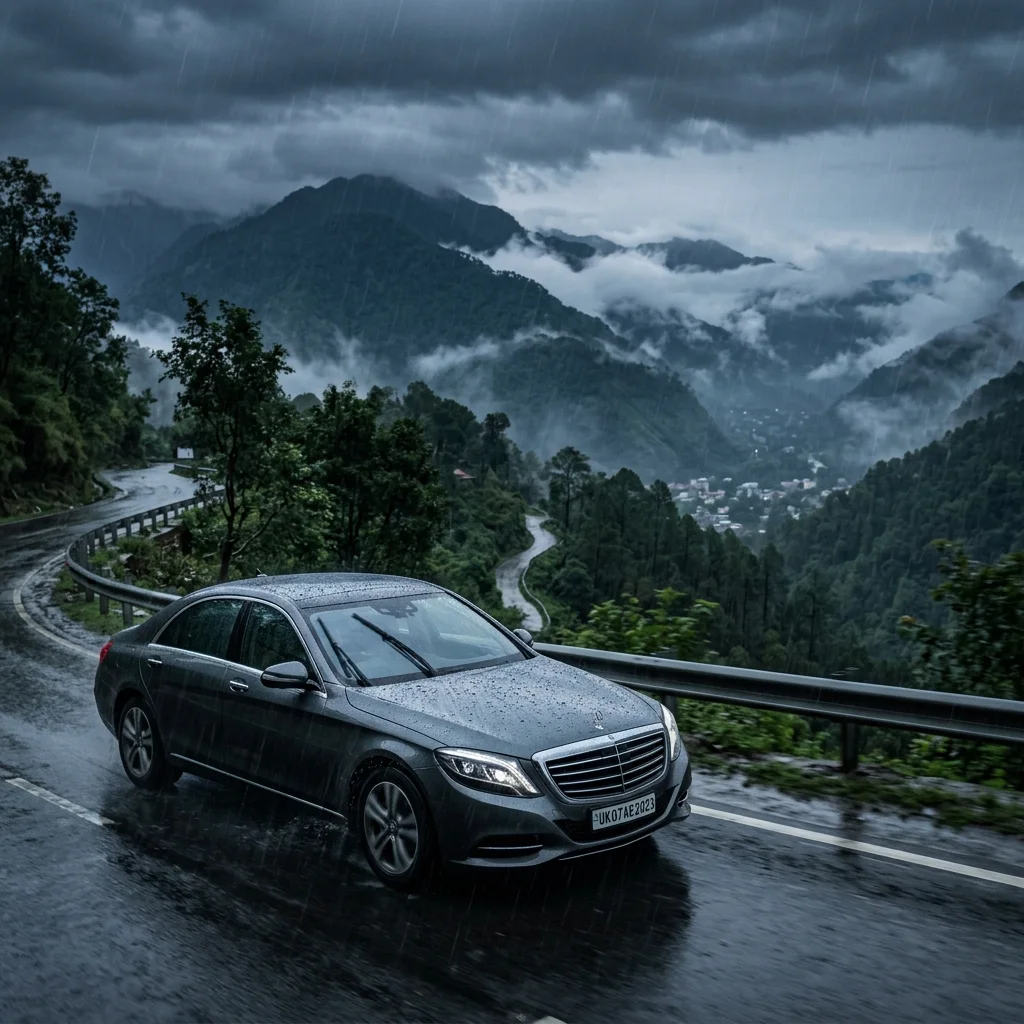
Most Noida car owners treat the monsoon the same way they treat the summer — something to tolerate until it passes. That's an expensive mistake. Noida's geography is different from Delhi's. The city sits in the confluence zone of the Yamuna and Hindon rivers, and when the monsoon arrives, that position creates sustained humidity levels and flooding patterns that no other NCR city quite replicates. Add the industrial output from NSEZ, the Phase 2 factories, and the Okhla corridor to the west, and every raindrop that falls on your car in Sector 62, Sector 137, or Greater Noida West carries a chemical cocktail that, left unchecked, quietly strips your clear coat, corrodes your underbody, and seeds mould in your cabin before October arrives. This guide covers exactly what happens and what to do about it — written by the technicians who service thousands of cars in Noida every season.
Here is something most car owners do not know about the city they live in. Noida is bounded on its western edge by the Yamuna and on its northern edge by the Hindon — two large river systems that create a humidity corridor that makes the post-rain environment in Noida consistently wetter and more corrosive than in central Delhi or south Gurgaon. When the rain stops and the sun comes back, moisture does not evaporate cleanly. It lingers in the air and on surfaces, extending the window during which dissolved pollutants can etch into your car's paint.
The second factor is industrial pollution. Noida's Phase 2 industrial zone, the Noida Special Economic Zone (NSEZ) near Dadri Road, and the southward drift of emissions from Okhla and Faridabad all contribute sulfur dioxide and nitrogen oxide to the atmosphere over Noida's residential sectors. These gases dissolve in monsoon rain to create sulfuric and nitric acid — this is what scientists formally call acid rain, and what Carmaa's technicians see every season in the form of paint etching, clear coat hazing, and hard water spots that wax alone cannot remove. Noida's monsoon rain has recorded pH values between 4.8 and 5.5 in pollution monitoring data — at those levels, damage to unprotected automotive clear coat begins within hours of drying on the surface.
The third factor is unique to Noida's urban form: the density of high-rise apartments. Sectors 78, 100, 107, 128, 137, and Greater Noida West (Noida Extension) have thousands of residential towers with basement and stilt parking. Enclosed parking dramatically reduces air circulation, keeps moisture trapped against parked cars for hours longer than open parking, and accelerates interior humidity buildup in ways that outdoor parking does not.
If you have not already applied a protective coating before the monsoon, the window to do it has not closed — but it is closing. A professional-grade ceramic coating bonds molecularly to your car's clear coat and creates a chemically resistant, hydrophobic surface that causes acidic rain, mud, and dissolved pollutants to bead up and roll off rather than sit and etch. For the kind of combined acid rain and sustained humidity that Noida sees from June through September, this is not a luxury upgrade — it is practical protection that prevents repair costs that run between ₹8,000 and ₹25,000 for a single paint correction job.
If your car parks outdoors in a sector like 62, 15, or Sector 18 market area — places where direct rain exposure is constant and sun-baked drying cycles happen every afternoon when the clouds break — consider our graphene coating service. Graphene's molecular structure uniquely reduces surface heat absorption, which is the primary reason water spots form aggressively in Noida's post-rain sun cycles. The thermal management advantage alone makes it worth the step up from standard ceramic for outdoor parking situations. Our detailed breakdown of both options is in our Graphene vs Ceramic Coating guide for Monsoon 2026, which maps the decision to your specific parking and commuting conditions.
This is the problem that surprises people the most when they hear about it. Cars parked in basement and stilt parking in Noida's high-rise apartments face a humidity problem that is actually worse than outdoor exposure during the monsoon — not better. Here is why. In outdoor parking, rain wets the car, drains off, and when the sun comes back the car dries relatively quickly. In basement parking, the concrete walls, floor, and ceiling absorb ambient moisture from the rains and retain it for days. The enclosed space keeps relative humidity pinned above 80–85% for extended periods. Your car sits in that warm, damp air continuously — and the interior is the primary victim.
The cabin air, already pulled in through the AC and ventilation system over time, accumulates moisture faster than most people expect. If your floor mats have any pooled water from wet shoes, or if there are minor door seal gaps that let in ambient humidity, the foam beneath your car's carpets absorbs that moisture. In Noida's June temperatures — typically 32–36°C even on cloudy days — that damp foam becomes a near-perfect mould growth environment. The smell develops within 72 hours of initial colonisation, but by the time you can smell it, the mould has already embedded itself in the foam substrate, the carpet jute, and potentially in the dashboard ventilation channels.
The solution is a professional interior dry cleaning and sanitisation service before the monsoon settles in, and again at the halfway point if you are using parking with poor ventilation. This eliminates existing spore colonies and applies an antimicrobial treatment to foam surfaces that inhibits regrowth through the season. If you are wondering whether a doorstep service can actually be performed inside your apartment building's parking area, the answer is yes — see our detailed post on whether Carmaa can wash cars in apartment basement parking.
Noida has its own list of chronically waterlogged points that flood predictably every monsoon season, and every car owner who commutes through this city learns them the hard way at least once. The underpass near Sector 12 police station, the Sector 55–56 road stretch, the DND flyway approaches during peak rain, the low-lying roads in Noida Extension near Gaur City and Mahagun Marvella, and sections of NH-9 near the Ghaziabad border all accumulate water faster than the drainage infrastructure can clear it during a heavy rain event.
If your car drives through standing water — even at slow speed — the spray from your own tyres and from adjacent vehicles throws a continuous jet of contaminated, muddy water directly onto every metal surface under your car. Once this mud dries, it traps moisture against bare metal on your frame rails, exhaust, brake lines, and wheel arch inner liners, and the rust process begins from within. The practical defence is a high-pressure underbody flush after every significant rain event where you drove through waterlogged sections, followed by an anti-rust underbody treatment applied before peak season. We have covered this in detail in our guide on protecting your car's underbody from monsoon rust.
If you get caught in a severe waterlogging event where water enters the cabin: do not attempt to start the engine if the water level reached the air intake on the front bumper. Engine hydrolock — where water enters the cylinders and the piston tries to compress an incompressible fluid — can bend or snap a connecting rod and destroy an engine in seconds. Get a tow, open all cabin doors to drain standing water, and get a professional interior treatment done the same day. Do not leave wet carpets overnight in Noida's June temperatures.
Noida has two major expressways that handle enormous truck traffic during the monsoon season — the Noida-Greater Noida Expressway and the Yamuna Expressway extension. At 80–100 km/h in wet conditions, the rooster tails from truck rear wheels throw water, gravel, and road surface debris at ballistic velocity directly at your car's underbody and front bumper. At this speed, even a small stone becomes capable of chipping paint off the lower panels, and the mud film deposited in a single expressway run in the rain can be significantly more corrosive than what a city drive does.
If you use these expressways during commute hours — particularly if you drive from sectors near Sector 150, Knowledge Park, or Tech Zone IV toward Delhi — scheduling a professional underbody flush and inspection every four to six weeks during monsoon season is a worthwhile investment. The post-rain waterless wash and underbody rinse that Carmaa technicians perform as part of the full doorstep service package are designed specifically to handle this kind of expressway contamination without requiring you to find a water source or drive to a service centre.
The short answer, and the one our technicians give every customer, is every four to five days during weeks when the rain is active, and within 24 hours after any heavy rain-and-sun cycle where you can see dried watermarks or mud residue on the paint. The longer answer depends on where you park. For the full breakdown of wash frequency for Indian conditions — including covered versus uncovered parking, city pollution levels, and driving patterns — see our detailed article on how often to wash your car in India.
For Noida residents in particular, the method matters as much as the frequency. Bucket washing with a rag or sponge on a dirty, dusty car after rain drags abrasive particles across the clear coat and creates the micro-scratches that make the surface progressively more susceptible to acid etching. A waterless wash using high-lubricity polymer products — the same method used in every Carmaa doorstep car wash in Noida — encapsulates contaminants and lifts them safely without surface abrasion. This is especially practical in apartment complexes where outdoor washing space is either prohibited by the RWA or genuinely unavailable during the rains.
There is a practical safety dimension to monsoon car care that gets less attention than paint protection but matters just as much. Noida's expressways and outer sector roads have heavy truck traffic and poor street lighting in many stretches. Driving with a contaminated windshield in heavy rain — one that streaks rather than clearing cleanly — is a genuine safety risk. The fix is a hydrophobic glass coating applied to the exterior windshield surface, which causes rain to bead and roll off at driving speeds rather than smearing across the glass. Our article on glass coating and hydrophobic windshield protection for the monsoon covers how this works and how long it lasts in real-world Noida driving conditions.
Carmaa's doorstep car care service in Noida covers all sectors across the city — from Sector 18 and Sector 62 to Sector 137, Sector 150, and Greater Noida West. Our technicians come to your apartment building or office complex with all equipment, use only waterless, eco-certified polymer products, and complete the service in your existing parking space without requiring a water connection or drainage facility. There is nothing to book in advance except a time slot. If you want the full pre-monsoon and mid-monsoon action plan in one place, the pre-monsoon car care checklist for 2026 covers every step in sequence.
For comparison with how the same monsoon threats play out differently just across the Delhi border, see our Monsoon Car Care Guide for Delhi NCR 2026. The underlying chemistry is the same, but the geographic and urban factors that amplify damage in Noida — river humidity corridors, industrial zones, and basement parking density — make some steps more urgent here than they are even fifteen kilometres away in Delhi.
At least every four to five days during active monsoon weeks. Noida's rain carries dissolved industrial pollutants that etch into clear coat within 48–72 hours if allowed to dry on the surface. A waterless wash between rains is the safest and most practical method for residents in apartment complexes where outdoor washing is restricted.
Yes, strongly. Given Noida's combination of industrial acid rain and sustained Yamuna-Hindon humidity, an unprotected clear coat faces significantly more chemical stress than in lower-pollution cities. A professional ceramic or graphene coating creates a hydrophobic barrier that reduces paint etching, hard water spotting, and post-rain cleaning effort dramatically. It pays for itself by preventing a single paint correction job, which costs ₹8,000–₹25,000 depending on the extent of damage.
Do not attempt to start the engine if water has entered the engine bay above the air intake level. Have the car towed to dry ground first. If water reached the cabin floor, open all doors to drain it and book a professional interior deep clean the same day — mould establishes itself in wet carpet foam within 48–72 hours at Noida's June temperatures. Get the underbody, brake lines, and electrical connections inspected before driving again.
Yes. Noida's proximity to NSEZ, Phase 2 industrial units, and the Okhla corridor means monsoon rain over the city is measurably more acidic. Reported pH values of Noida's monsoon precipitation in pollution monitoring data have ranged between 4.8 and 5.5 — technically acid rain, at a level that visibly degrades unprotected automotive clear coat within a single wet season. A protective coating and regular post-rain washing are not optional extras here; they are standard maintenance for any car used year-round in Noida.
Related Blogs
Monsoon Car Care Delhi NCR 2026
Monsoon Car Care Gurgaon 2026
Graphene vs Ceramic Coating Monsoon 2026
Pre-Monsoon Car Care Checklist 2026
Protect Car Underbody From Monsoon Rust
Hydrophobic Glass Coating for Monsoon


