Graphene vs Ceramic Coating: The Ultimate Monsoon Shield for Your Car in 2026
As the monsoon approaches Delhi-NCR and Dehradun, car owners face the annual battle against acidic rain, mud, waterlogging, and extreme humidity. These elements are notorious for causing water spots, dulling the clear coat, and accelerating rust. While waxing is a temporary fix, advanced nano-coatings offer the heavy-duty protection required to survive the season. But in 2026, the big debate in auto detailing is: Should you choose Graphene or Ceramic Coating? Here’s everything you need to know to make the best choice for your car this monsoon.
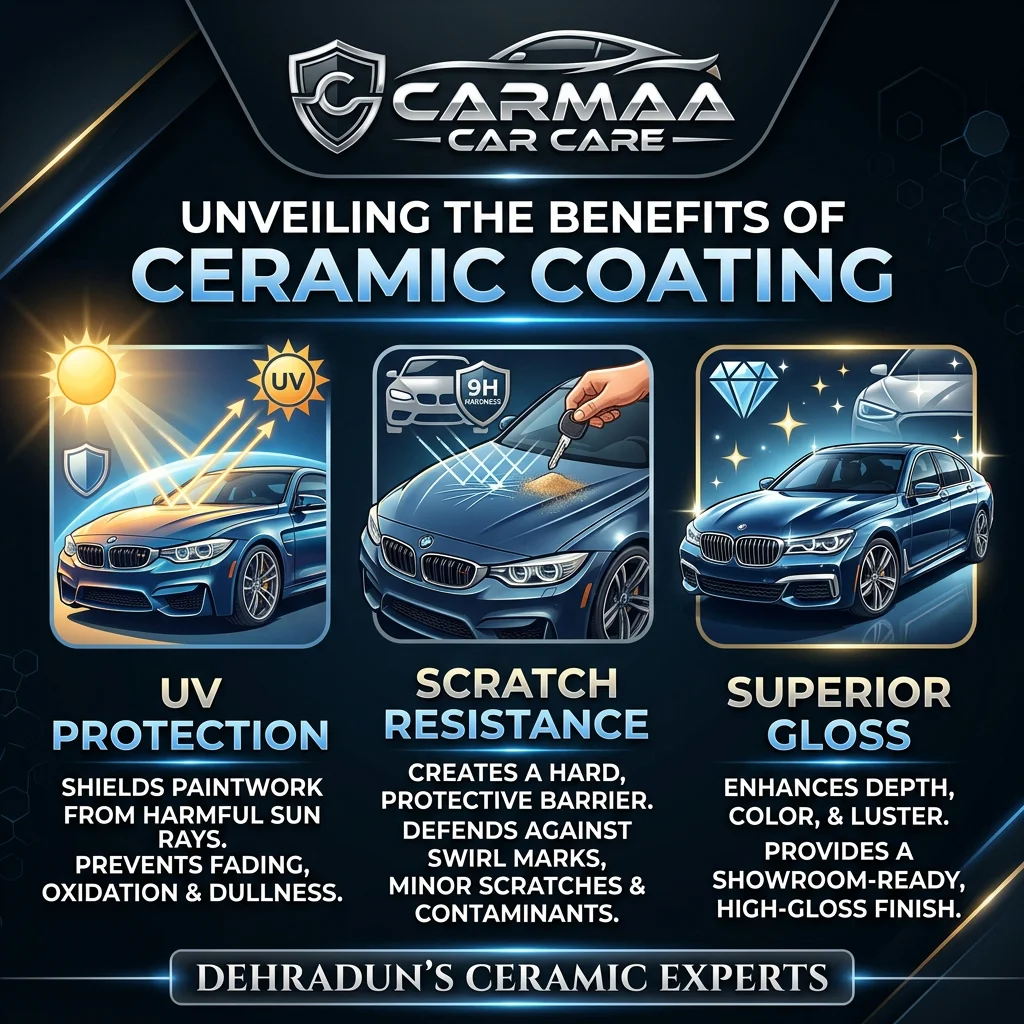
Ceramic coating is a liquid polymer derived from silicon dioxide (SiO2) that chemically bonds with your car's factory paint. It creates a semi-permanent layer of protection that is incredibly glossy and highly hydrophobic (water-repellent). For years, it has been the gold standard for protecting against UV rays, bird droppings, and minor scratches.
Graphene coating is the next evolution in paint protection. Graphene itself is a one-atom-thick layer of carbon arranged in a honeycomb lattice—it is incredibly strong, flexible, and conductive. In auto detailing, graphene oxide is infused into a ceramic-like matrix. This results in a coating that shares the benefits of ceramic but amplifies certain properties, making it tougher and more resilient.
Winner: Graphene
While ceramic coatings are highly hydrophobic, graphene coatings boast a slightly higher "water contact angle." This means water droplets slide off even faster and leave less residue behind. During heavy monsoon showers in Gurgaon or Faridabad, a graphene-coated car will literally shed dirty rainwater in seconds.
Winner: Graphene
One of the biggest issues with ceramic coatings is their tendency to retain heat, which can cause water droplets to evaporate quickly and leave mineral deposits (water spots) behind. Graphene reduces surface heat absorption, significantly lowering the chances of water spots forming after a sudden monsoon downpour followed by harsh sunlight.
Winner: Tie
Both coatings deliver an incredible, mirror-like "candy gloss" finish. While some detailers argue that graphene provides a slightly deeper, darker shine on black or dark-coloured cars, ceramic coatings are renowned for their glass-like clarity. Either choice will keep your car looking showroom-new despite the muddy roads.
Winner: Graphene
A high-quality ceramic coating will protect your car for 2 to 3 years. Graphene coatings, owing to their intense tensile strength and chemical resistance, can easily push past the 3 to 5-year mark with proper maintenance, surviving multiple monsoons.
If you want tried-and-tested, brilliant gloss at a slightly lower price point, Ceramic Coating is a fantastic choice that will easily protect your car through the monsoon. However, if you park your car outdoors, deal with high-pollution acidic rain (common in Delhi NCR), or simply want the absolute pinnacle of water-spot resistance and longevity, Graphene Coating is worth the premium.
Whether you choose the proven brilliance of Ceramic or the cutting-edge toughness of Graphene, application is everything. Both require meticulous paint correction and surface prep before application. Carmaa Car Care offers premium Graphene Coating and Ceramic Coating services delivered right to your doorstep across Dehradun, Delhi, Noida, Gurgaon, Ghaziabad, and Faridabad. Book your slot before the rains hit, and let our experts give your car the ultimate monsoon shield.
Both offer excellent protection, but Graphene has a higher water contact angle, meaning superior hydrophobicity (water-repelling capability). This makes it slightly better at preventing water spots from acidic monsoon rain in highly polluted areas like Delhi NCR.
A high-quality ceramic coating typically lasts 2-3 years, while professional graphene coatings can last 3-5 years or more, depending on maintenance.
While DIY kits exist, professional application is highly recommended. The car's paint must be deeply decontaminated and machine-polished first. If applied incorrectly, high-grade coatings can leave high spots or streaks that require wet-sanding to remove.
Related Blogs
Ultimate Monsoon Car Care Guide
PPF vs Ceramic Coating
Pre-Monsoon Checklist 2026


