Tyre Care in Monsoon India: Tread Depth, Pressure, Hydroplaning and Alloy Wheel Protection
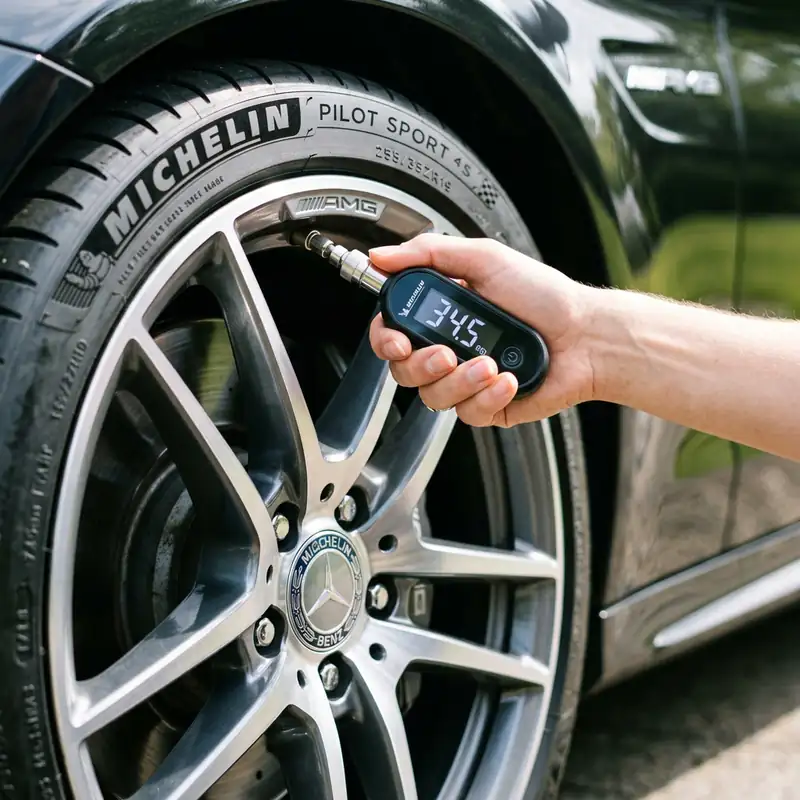
Every monsoon, Indian roads claim lives that had nothing to do with driver error — they had to do with tyre condition. Hydroplaning on a flooded NCR expressway, brake lag on a waterlogged Dehradun hill road, a blowout caused by a pothole hidden under standing water — these are not random events. They are predictable outcomes of predictable tyre failures. Most Indian car owners check their tyres visually once a year, if that. During the monsoon, this is not enough. Tyre tread depth, inflation pressure, and alloy wheel condition interact with wet roads in ways that are not obvious until something goes wrong. This guide explains exactly what to look for, why it matters, and what the numbers actually mean.
A tyre's tread pattern exists for one purpose on wet roads — to channel water away from the contact patch fast enough to maintain rubber-to-tarmac contact. A new tyre has approximately 7–8 mm of tread depth. Indian law requires a minimum of 1.6 mm. The problem is that 1.6 mm is a legal minimum, not a safety threshold — it is the point at which the tyre is technically worn out, not the point at which it becomes dangerous in rain. On a wet road, a tyre at 1.6 mm needs approximately 35% more distance to stop from 80 km/h than the same tyre at 4 mm. At 60 km/h in monsoon rain, that extra distance is the difference between stopping before an obstacle and hitting it.
The working safety threshold for monsoon driving is 3 mm. You do not need a depth gauge to check this — a standard 2-rupee coin has a rim of approximately 2.5 mm, and a 5-rupee coin rim is approximately 3.5 mm. Insert the coin into the main tread groove: if the tread covers the coin's rim, you are above the safety threshold. If not, replace the tyres before the rains peak. Check all four tyres — rear tyres often wear differently from fronts, and uneven wear within a single tyre (worn centre on over-inflated tyres, worn edges on under-inflated ones) indicates a pressure problem that needs correcting alongside the tread check. Our pre-monsoon checklist covers this and all other safety checks in a single walkthrough.
The manufacturer's recommended tyre pressure — printed on your door jamb sticker and in the owner's manual — does not change with season. The correct pressure in July is the same as in December. What changes is the ambient temperature, and temperature directly affects the air pressure inside the tyre. For every 10°C drop in ambient temperature, tyre pressure drops approximately 1 PSI. During the monsoon in North India, morning temperatures can be 8–12°C cooler than peak summer afternoons. This means a tyre that read the correct 32 PSI on a hot afternoon in May might read 30–31 PSI on a cold monsoon morning in July — already at the lower edge of acceptable range.
The practical rule: check tyre pressure weekly during the monsoon, always on a cold tyre — meaning before you have driven more than 2 km that morning. A tyre checked after a highway drive will read 3–5 PSI higher than its true cold pressure due to heat from rolling friction. Under-inflated tyres flex more at the sidewall, generate more heat, and are significantly more vulnerable to pothole impact damage. On flooded roads, an under-inflated tyre's contact patch deforms in a way that makes water channelling less effective, increasing aquaplaning risk. Do not deflate your tyres thinking softer rubber grips better in rain — it does not, and you add blowout risk on the debris-strewn roads that monsoon potholes leave behind.
Hydroplaning (also called aquaplaning) occurs when the water on the road surface builds up in front of the tyre faster than the tread grooves can channel it away. At that point the tyre rides up on a film of water, losing contact with the road surface entirely. Steering input has no effect. Braking has no effect. The vehicle continues in its original direction until either the speed drops enough for the tyre to re-establish contact, or the driver makes the situation worse by braking sharply or turning the wheel.
On India's monsoon roads, the conditions for hydroplaning exist regularly: water depth of just 2–3 mm is sufficient at highway speeds with worn tyres. On the Delhi-Meerut Expressway, Yamuna Expressway, NH-48 Gurgaon section, or any smooth-surface highway in rain, speeds above 80 km/h on tyres below 3 mm tread are genuinely dangerous. The correct response when you feel the steering go light and the car begin to float: ease off the accelerator slowly, hold the steering straight, and wait for speed to drop and contact to return. Do not brake. Do not turn. After the car regains traction, reduce speed and pull over when safe. For city driving in NCR where flooded underpasses are common, treat any water crossing above ankle depth as a potential aquaplaning zone regardless of speed.
Alloy wheels on most Indian cars — Hyundai Creta, Maruti Baleno, Tata Nexon, Honda City — come factory-finished with a clear-coat lacquer over the machined or painted aluminium. This lacquer is the only thing standing between the alloy and monsoon acid rain. In NCR's industrial corridors — Noida, Faridabad, Gurgaon, Ghaziabad — monsoon rain pH regularly measures between 4.5 and 5.2, meaning it is mildly to moderately acidic. This acid reacts slowly with the lacquer, dulling the finish. Where the lacquer has been broken by a kerb scrape, a stone chip, or simple UV degradation over 3–4 years, the exposed aluminium reacts faster — creating the white pitting and bubbling that is visible on older alloy wheels and is effectively irreversible without professional refurbishment.
The protection protocol is simple: keep the alloys clean. Acid rain deposits that are washed off within 48 hours cause little damage. Deposits that sit on the surface through repeated wet-dry cycles concentrate and etch progressively deeper. A professional waterless wash every 4–5 days during peak monsoon — which includes tyre and wheel cleaning — removes these deposits before they can act. Our guide on alloy wheel cleaning and tyre care covers the correct cleaning method in detail, including what not to use (acidic wheel cleaners will accelerate the damage rather than prevent it).
Front tyres on front-wheel-drive cars — which includes most Indian sedans, hatchbacks, and crossovers — wear significantly faster than rear tyres because they carry both the steering and power delivery loads. By the time the front tyres are at 3 mm tread depth, the rears are often still at 5–6 mm. Rotating tyres (moving fronts to rear and vice versa) before the monsoon extends the life of the set, but more importantly for safety, it ensures that the best-condition tyres are at the front where steering and primary braking forces act. A pre-monsoon rotation is one of the most cost-effective tyre safety investments you can make. It takes 30 minutes at any tyre service outlet and costs ₹300–₹500.
Carmaa's doorstep wash includes a visual tyre and wheel inspection — our technicians will flag any tyre with visible tread wear, sidewall damage, or alloy lacquer damage during the service. For full tyre care across Delhi, Noida, Gurgaon, Faridabad, Ghaziabad, and Dehradun, check our complete monsoon car care guide for SUVs or our underbody rust protection guide for a full picture of what monsoon does to your vehicle below the waterline.
The legal minimum is 1.6 mm but the practical monsoon safety threshold is 3 mm. Below 3 mm, stopping distances on wet roads increase significantly and hydroplaning risk rises sharply at speeds above 60 km/h. Use a 2-rupee coin to check — if the tread doesn't cover the coin's rim when inserted into the groove, the tyre needs replacing.
Neither — maintain the manufacturer's recommended pressure year-round. Check weekly on a cold tyre during the monsoon because temperature drops between morning and afternoon can cause 1–2 PSI variation. Never deflate tyres for "better wet grip" — it worsens aquaplaning risk and increases pothole blowout vulnerability.
Hydroplaning occurs when tread grooves cannot channel water fast enough, causing the tyre to ride on a water film and lose road contact. If you feel the steering go light: ease off the accelerator gently, hold the wheel straight, do not brake. Wait for speed to drop and contact to return, then reduce speed and pull over safely.
Yes. Acid rain (pH 4.5–5.2 in NCR's industrial zones) slowly degrades the clear-coat lacquer on alloy wheels, and attacks bare aluminium where the lacquer is chipped or cracked. Keeping alloys clean with a wash every 4–5 days removes acid deposits before they etch. Avoid acidic wheel cleaners — they accelerate the same damage.
Related Blogs
How to Clean Alloy Wheels & Tyre Care
Pre-Monsoon Car Care Checklist
Protect Car Underbody From Monsoon Rust
Monsoon Car Care for SUVs
Top 5 Monsoon Car Care Mistakes
Car Fluids Check for Monsoon India


