Car Fluids to Check Before and During Monsoon in India: Brake Fluid, Coolant, Wiper Fluid and More
Most Indian drivers think of monsoon car care as washing off the mud and checking the wipers. The fluids under the bonnet rarely get attention — until they cause a problem. Brake fluid that has silently absorbed monsoon humidity for two years can cause brake fade on a rain-slicked highway. Coolant diluted by successive tap-water top-ups promotes internal corrosion in the cooling system. Wiper fluid that runs dry in a downpour on NH-48 is a genuine visibility emergency. These are not rare scenarios — they happen every monsoon season across India, and they are all preventable with a 30-minute fluids inspection before the rains arrive. This guide covers every fluid your car needs checked before and during the monsoon, with the specific numbers that tell you what action to take.
Brake fluid is hygroscopic — it absorbs moisture continuously from the air through microscopic permeation in rubber brake hoses and through the reservoir cap seal. This is normal and expected. What matters is how much moisture the fluid has accumulated, because moisture lowers the fluid's boiling point in a precise and dangerous way. Fresh DOT 4 brake fluid has a dry boiling point of approximately 230°C. At 3.7% water content — typical for fluid that has not been changed in 2 years in a humid climate like NCR or Dehradun — the wet boiling point drops to approximately 155°C.
On India's monsoon roads, this matters. Repeated hard braking on a wet highway descent, stop-and-go braking on a flooded urban road, or emergency braking to avoid a pothole hidden in standing water — these scenarios generate significant heat in the brake callipers. When that heat exceeds 155°C in degraded fluid, the fluid vaporises. Vapour is compressible; brake fluid is not. The brake pedal goes soft, then to the floor. This is brake fade from fluid vapourisation, and it is not a mechanical failure — it is a maintenance failure that the owner could have prevented. The fix: if your brake fluid has not been changed in the last 2 years, flush and refill before the monsoon. The cost is ₹600–₹1,200 at most service centres and the fluid change takes 20 minutes.
Engine coolant performs three jobs: it transfers heat away from the engine, it prevents corrosion inside the cooling passages, and it prevents the coolant from boiling or freezing at extremes. In India, freezing is not the concern — but overheating is, especially in monsoon stop-and-go traffic where the engine is working hard and airflow through the radiator is minimal. The problem is not usually the coolant running out — it is the coolant being diluted.
When the coolant reservoir level drops and is topped with plain tap water (which is what most drivers and even roadside mechanics do), two things happen over successive top-ups. First, the glycol concentration falls below 35%, reducing the effectiveness of the corrosion inhibitors and anti-foaming agents. Second, tap water in Indian cities contains significant mineral content — the same minerals that cause hard water stains on car paint — which deposit inside cooling passages over time. In Dehradun's hard water zones and across NCR, this is particularly damaging. The correct top-up fluid is a pre-mixed 40/60 or 50/50 coolant-to-distilled-water mix. An inexpensive refractometer (₹300–₹500) reads coolant concentration in 30 seconds. If it shows below 35% glycol, a full flush and refill is warranted before peak monsoon.
Windshield washer fluid is the most underrated safety fluid in an Indian monsoon. On any busy highway in rain, mud and diesel spray from trucks coats the windshield within minutes. If the washer reservoir is empty, the driver is left with wipers smearing contaminated water across the glass — reducing forward visibility to a fraction of what rain alone would cause. This is one of the most common monsoon accident contributing factors that never appears in incident reports because it is invisible after the fact.
Fill the washer reservoir completely before the monsoon. Use a proper windshield washer concentrate diluted to the correct ratio — not plain water, which leaves mineral streaks, and not detergent, which damages paint and rubber seals. A 500 ml washer concentrate bottle (₹80–₹150) diluted in 3–4 litres of distilled water fills a standard reservoir and should last most of the monsoon season for city driving. Keep a backup concentrate bottle in the boot. Checking and refilling the washer fluid takes 2 minutes and is the single cheapest monsoon safety intervention available.
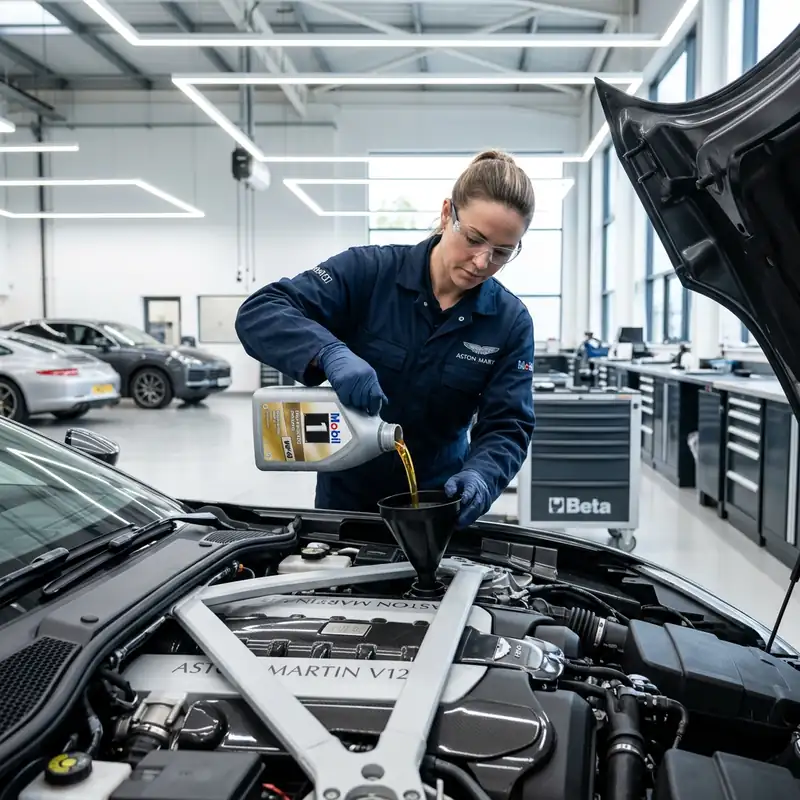
Engine oil itself does not degrade due to humidity — the sealed combustion environment keeps moisture out of the oil sump under normal conditions. What the monsoon does affect is when an oil change falls due. If your oil change is within 2,000 km or 2 months of the monsoon start, do it before the rains rather than after. During heavy monsoon driving — frequent cold starts in rain, extended low-speed city running, multiple water crossings — engine oil degrades somewhat faster than in normal dry conditions because the engine takes longer to reach operating temperature on cold mornings, resulting in more condensation in the crankcase before the PCV system burns it off.
The viscosity grade your owner's manual specifies is correct for the monsoon. Do not switch to a thicker oil thinking it protects better in rain — oil viscosity affects cold start protection and fuel economy, not rain resistance. The one engine-related check that genuinely matters in monsoon is the air filter. If you have driven through water deeper than 15–20 cm, inspect the air filter immediately after. A water-saturated air filter restricts airflow and, in a severe water crossing, can draw water into the intake — causing hydro-lock, which can bend connecting rods and require engine rebuilding. This is preventable by checking the air filter after any significant water crossing and by avoiding driving through water of unknown depth.
The battery terminal connections are the single most common cause of monsoon starting failures in Indian cars. The green-white corrosion that builds up on lead terminal posts accelerates in high humidity, and a thick enough layer of corrosion raises contact resistance to the point where the starter motor receives insufficient current. The car turns over slowly, or does not start at all — a problem that is frequently misdiagnosed as a dead battery when the battery itself is fine and the terminals just need cleaning.
Terminal cleaning takes 5 minutes: disconnect the negative terminal first, clean the posts and terminal clamps with a wire brush (or a paste of baking soda and water for heavy corrosion), reconnect, and apply a thin coat of petroleum jelly or automotive terminal grease over the connection. This creates a moisture barrier that slows re-corrosion through the monsoon season. While you are at the battery, check the terminal clamp tightness — vibration on pothole-ridden monsoon roads loosens clamps faster than usual. A loose connection that was fine in March may cause intermittent starting problems by July.
Power steering fluid (on hydraulic systems) and clutch fluid (on hydraulic clutch systems, which share DOT specification with brake fluid) should be checked for level and colour. Both fluids are visible through their translucent reservoirs. Dark brown colour indicates oxidation and degradation — clear or light amber is correct. Level should be within the min-max marks. These fluids do not typically need seasonal flushing but should be inspected as part of a pre-monsoon fluids check. A hydraulic clutch system that develops sponginess during the monsoon — the pedal feeling less positive — is showing the same moisture-absorption symptom as brake fluid and should be flushed.
Before the monsoon peaks, go through each of these in order:
This complete check takes under 30 minutes and covers every fluid failure mode that causes monsoon breakdowns and accidents. Pair it with the tyre check from our tyre care monsoon guide and the full pre-monsoon car care checklist for a complete monsoon readiness walkthrough.
Brake fluid is hygroscopic — it absorbs moisture through rubber hoses and reservoir seals over time. Absorbed moisture lowers the fluid's boiling point from 230°C (fresh DOT 4) to as low as 155°C at 3.7% water content. In heavy monsoon braking conditions, this causes brake fade — the pedal goes soft or to the floor. If the fluid has not been changed in 2 years, flush it before the rains.
A 40–50% coolant to 50–60% distilled water ratio. Never top up with plain tap water — it dilutes the corrosion inhibitors and deposits minerals inside cooling passages. Use a refractometer to check concentration; below 35% glycol requires a full flush and refill.
Replace wiper blades before every monsoon season if they show any streaking, skipping, or squeaking. India's summer heat and UV exposure cracks the rubber edge within one season. Fit blades exactly to the size specified in your owner's manual — oversized blades can damage the wiper arm by striking the A-pillar.
The engine itself is sealed against humidity, but battery terminals corrode faster in high humidity — clean them and apply terminal grease before the monsoon. More critically, inspect the air filter after any deep water crossing. A water-saturated air filter can draw water into the intake, causing hydro-lock — catastrophic and expensive engine damage that is entirely preventable.
Related Blogs
Pre-Monsoon Car Care Checklist
Tyre Care in Monsoon India
Top 5 Monsoon Car Care Mistakes
Protect Car Underbody From Monsoon Rust
Monsoon Car Care for SUVs
Essential Car Fluids Checklist


