Walk up to almost any car on an Indian road and the wheels tell the real story. The paint might be washed and shiny, but the alloys are coated in a dull grey-brown film, the tyre walls are faded, and there's baked-on grime in the spokes. Wheels take more abuse than any other surface on your car — yet they're the first thing people skip when they clean it. Here's how to do them properly, and why it actually matters.
Every time you brake, the brake pads press against the rotor and shed a fine powder of hot metallic and carbon particles — brake dust. Because it leaves the brakes hot, it doesn't just settle on your wheels; it can lightly fuse to the clear-coat and lacquer of the alloy. That's why a quick splash of water never gets wheels truly clean: the dust is partly bonded to the surface, not just sitting on top of it. Add road tar, mud and the dust that Dehradun and Delhi-NCR roads throw up, and a wheel goes from clean to grimy within days.
This isn't only about looks. Brake dust is mildly corrosive, and left on the alloy it slowly etches and pits the protective lacquer. Once that coating is compromised, the bare metal underneath starts to oxidise, leaving permanent cloudy patches and white corrosion spots that no amount of washing will remove — at that point you're looking at refurbishment, not cleaning. Regular, correct cleaning is genuinely the cheapest way to protect what your alloys are worth.
The golden rule: always clean wheels when they're cool, never straight after a drive. Spraying cleaner onto hot alloys makes it flash-dry and stain. Then:
• Rinse off the loose grit first. A pressure rinse removes sand and mud so you're not grinding it into the finish.
• Use a dedicated, pH-balanced wheel cleaner. Avoid harsh acidic products on a daily driver — they can strip the lacquer. A good wheel cleaner clings, breaks down the bonded dust, and rinses clean.
• Keep separate tools for wheels. A soft wheel brush for the face and a long detailing brush for the barrel and between the spokes. Never use your paint wash mitt on wheels — the embedded grit will scratch your bodywork next time.
• Don't forget the barrels and lug nuts. The inner barrel holds the most dust and is what people always miss.
• Rinse thoroughly and dry. Drying with a microfibre towel stops hard-water spots, which are a real problem with our mineral-heavy water.
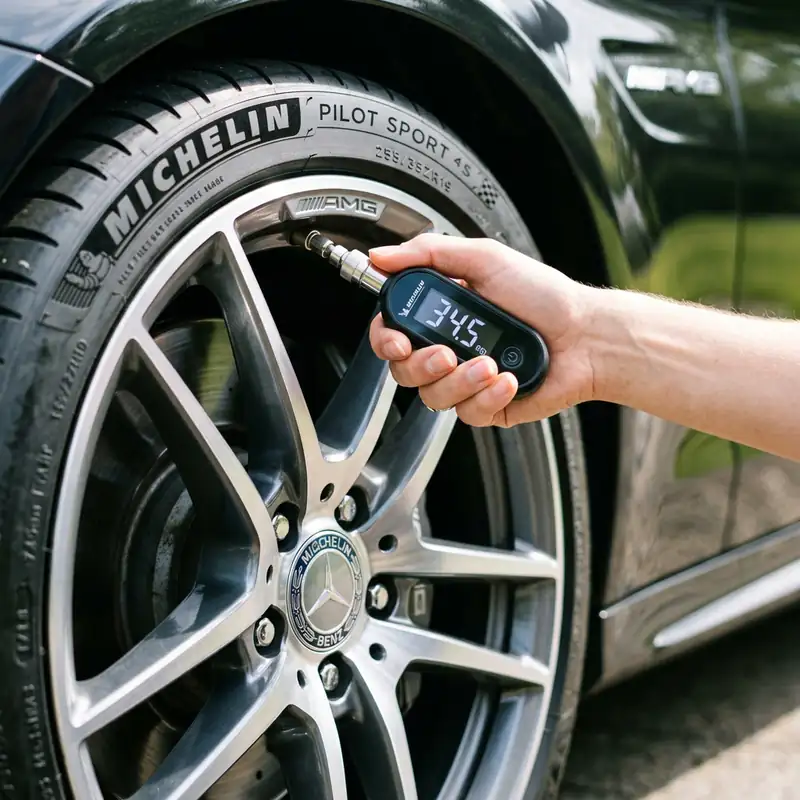
Clean wheels with faded, brown tyres look only half done. After washing, scrub the rubber sidewalls to lift old dressing and grime, then apply a water-based tyre dressing for a clean satin finish (glossy solvent dressings sling onto your paint and dry the rubber out over time). While you're down there, it's the perfect moment to check tyre pressure and tread depth — which matters enormously in the monsoon, when worn, under-inflated tyres are the main cause of aquaplaning on wet roads.
Once the alloys are properly clean, a wheel sealant or ceramic coating makes a huge difference. It puts a slick, heat-resistant barrier between the brake dust and the alloy, so dust can't bond as easily and rinses off with far less effort. It's the same principle as a ceramic coating on your paint — protection that makes maintenance easier, which is exactly what our detailers apply during a full car detailing service.
Cleaning your own wheels well is absolutely doable — the catch is having the right cleaner, the right brushes and the time to reach every barrel and spoke. If that sounds like a Sunday you'd rather not spend, that's exactly what we're for. With Carmaa, a trained detailer brings everything and does your wheels, tyres and the whole car right outside your home across Dehradun and Delhi-NCR. Book a doorstep wash or full detail and let us get your alloys looking factory-fresh again.


