Monsoon Car Interior Guide 2026: How to Stop Mould, Humidity & Musty Smells in Your Car
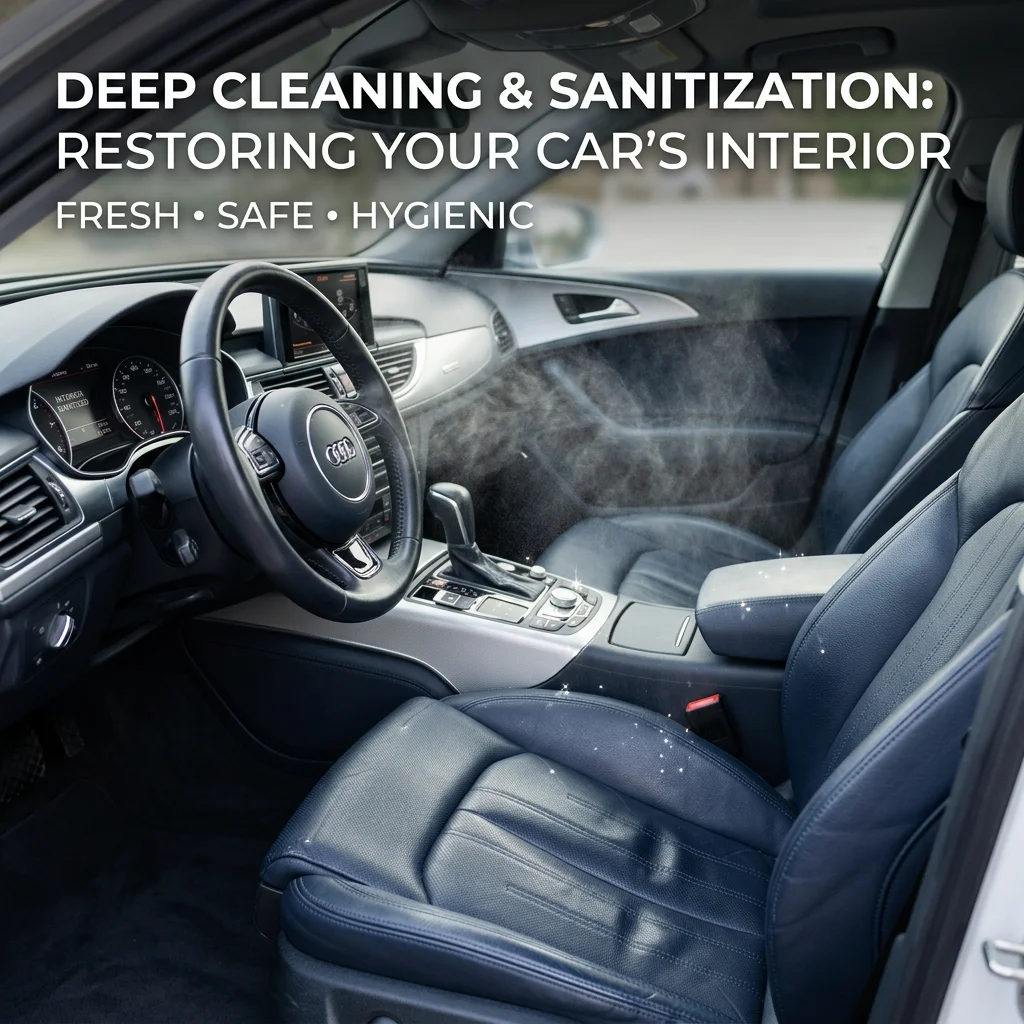
There is a problem happening inside thousands of cars across Dehradun and Delhi NCR right now, and most owners have no idea it has started. The monsoon arrived, the windows fogged up a few times, the footwell carpet got a little damp from wet shoes — and people moved on. What they do not realise is that inside those damp carpets, under those seats, and deep in the AC evaporator unit, humidity has already begun the process of creating the one thing you genuinely do not want inside a sealed metal box you sit in for hours every day: mould.
This is not a scare story. It is a practical reality that our technicians encounter on a significant percentage of interior cleaning calls during the months of June through September. Car interior mould during monsoon season is extremely common in both Dehradun's high-humidity hill environment and Delhi NCR's combination of heat, rain, and industrial air. And unlike paint damage, which you can see and track, interior mould is invisible in its early stages. By the time it smells obvious, it has already established colonies in places that require professional extraction equipment to fully treat.
This guide explains exactly what is happening, what to look for, what works and what does not, and the right time to bring in professional help — so your car's cabin stays clean, safe to breathe in, and mould-free for the rest of the 2026 monsoon season.
Mould needs three things to grow: organic material, warmth, and moisture. Your car's interior provides all three in abundance. The carpets, seat foam, fabric headliner, and jute backing under the carpet are all organic substrates that mould spores — which are present in outdoor air everywhere in India — colonise readily when moisture levels rise. The interior of a parked car in June can reach temperatures of 55–65°C on a sunny day. Add monsoon humidity levels of 80–95% and you have the most perfect mould incubation environment imaginable.
What makes this especially insidious is how moisture actually gets into a car that appears completely closed. Wet shoes and damp clothing carry far more water into the footwell than people realise. Door seals that have dried and micro-cracked from summer heat allow thin films of water to seep in along the door sill during heavy rain. When you park facing a slope and rainwater pools against the door threshold, it can find its way through aged rubber. Sunroof drains that are partially blocked by accumulated debris back up and leak directly onto the headliner. And perhaps most overlooked: the car's own ventilation system actively draws humid outside air through the cabin when the fan is running and the air conditioning is set to fresh mode, depositing that moisture onto the cold evaporator coil inside the dashboard.
The smell usually appears two to four days after the first significant rainfall. It is earthy, slightly musty, and strongest when you first open the door in the morning after the car has been parked overnight. Many people assume it is just the smell of rain or damp roads. It is not. That specific smell is the metabolic byproduct of mould colonies — the same smell you would recognise from a damp basement wall or an old book left in a wet environment.
At this stage — the smell stage — the mould is present but has not yet penetrated deeply into foam or backing materials. This is the best time to act, because a thorough professional dry cleaning service can eliminate the source before it becomes a structural interior problem. Our blog on the hidden health risks of a dirty car interior covers what happens if this stage is ignored — and the downstream health implications are significant enough to take seriously, especially if you have children or elderly family members regularly riding in the car.
If the smell has been present for more than a week, or if it intensifies whenever you switch on the AC, the mould has almost certainly reached the evaporator coil and the cabin air filter. At this point, a simple wipe-down or over-the-counter odour spray will mask the smell for a few days but will not address the source.
Most car owners check the obvious places and find nothing, then conclude the car is fine. The mould is almost never in the obvious places. Here is where to actually look, and what you are looking for:
Under the front seats: Flip the seat forward and look at the carpet directly under the seat frame — this area gets no direct air circulation and stays damp longest. Mould here often appears as a faint grey or greenish discolouration rather than the dramatic black spots most people expect.
The base of the B-pillar and door sill: Where the carpet meets the rubber door seal. Peel back the rubber slightly and look at the carpet edge. This is one of the first areas to develop mould because water that enters along the door seal travels straight here.
The jute backing under the carpet: You cannot easily access this without lifting the carpet, but if the carpet feels even slightly damp to the touch and the smell is present, the jute backing is almost certainly already affected. Jute is a natural fibre and one of the fastest organic substrates for mould colonisation.
The rear footwell: Particularly in sedans where the rear passengers place their feet, this area traps moisture from wet shoes and is often the area that remains damp longest because it gets less ventilation than the front.
The AC cabin air filter: This sits behind the glovebox in most cars and filters air entering the cabin. In monsoon conditions, it accumulates moisture and becomes a mould growth medium that then distributes spores into the cabin every time the AC runs. Check it by removing the glovebox panel — a mouldy filter has a very distinctive musty smell when held close.
Our detailed write-up on the science behind professional interior dry cleaning and sanitisation explains why consumer-grade sprays cannot reach these areas and what equipment is actually required to treat them effectively.
There are a few things you can do consistently on your own that meaningfully reduce interior humidity levels during the monsoon, and a number of popular "hacks" that do very little. Here is an honest breakdown:
Silica gel packets — genuinely effective, with caveats: Place large silica gel packets (100g or larger) in both front footwells and the rear footwell. Silica gel absorbs moisture from the immediate air around it efficiently. The caveat is that car cabins have a lot of air volume, so small packets are largely ineffective — you need enough volume to make a measurable difference. Replace or recharge them every two to three weeks during the monsoon. This does not prevent mould if it is already established, but it significantly slows new formation.
Set AC to recirculate when driving in rain: When it is actively raining, switching the AC to recirculation mode (the button with the car and a circular arrow) prevents the system from drawing humid outside air in. The existing cabin air is already drier than outside air during a downpour. This small change makes a meaningful difference to how much moisture enters the evaporator coil.
Leave windows cracked (only when not raining): When the car is parked in a covered or sheltered spot and it is not actively raining, leaving the windows down two to three centimetres allows air circulation that helps the interior dry out. Never do this in open rain or even in light drizzle — even a small amount of rain misting through an open window is enough to wet the door panel and window trim.
Remove wet items immediately: Umbrella bags are a genuinely useful investment. An open umbrella left in the rear footwell or boot is one of the most common sources of significant interior moisture during monsoon season.
What does not work: Odour sprays, air fresheners, and fabric refreshers. These mask the smell without touching the mould. Baking soda on carpet is similarly ineffective against established colonies — it absorbs odour molecules but does not kill mould or dry the moisture source. These are temporary cosmetic fixes for what is a biological problem.
This is the part of the interior mould problem that most people genuinely do not know about, and it explains why interior mould often seems to come back even after attempts at cleaning. The AC evaporator coil — the component inside your dashboard that actually cools the air — operates by chilling a refrigerant to a temperature below the dew point of the cabin air. This causes moisture to condense on the coil surface, just like the outside of a cold glass of water on a humid day. Normally this condensate drains out through a rubber pipe below the car. But when the coil surface accumulates dust, pollen, and organic debris — as every car's does over time — the condensate no longer drains cleanly. Instead it sits on the contaminated coil surface, and in Dehradun's June humidity, mould colonies develop on the coil itself within days.
Every time you run the AC, the fan blows air across this mould-colonised coil and directly into the cabin. This is why the smell is often strongest when you first turn on the AC, and why people with respiratory sensitivities notice symptoms specifically when the AC is running. Replacing the cabin air filter helps, but it does not treat the coil itself. The coil requires a specific anti-fungal evaporator coil spray applied through the vents — a treatment that is part of our car deep cleaning service and is particularly recommended at the start of the monsoon season.
There is a threshold beyond which DIY approaches will not fully resolve the problem — and that threshold is reached faster than most people expect. If the musty smell is present inside the car for more than a week, if you can see any visible discolouration on carpet or seat fabric, or if your car was caught in a heavy downpour with the windows open or experienced a waterlogging incident at any point, professional treatment is not optional. At this stage, the mould has penetrated into materials that require extraction-grade equipment to fully address.
Carmaa's professional car dry cleaning service uses hot steam extraction and HEPA-grade vacuum suction to reach into carpet backing, under seat foam, and through upholstery weave in ways that no surface cleaning method can replicate. Hot steam at the temperatures we use (130–160°C at the cleaning head) is one of the few agents that kills mould spores on contact without requiring the use of harsh chemical biocides that leave residue in the cabin air you breathe. The treatment also includes an antimicrobial spray applied to all soft surfaces after cleaning, which creates a residual barrier that inhibits new mould formation for the next four to six weeks.
We also perform AC duct and evaporator sanitisation as part of the interior deep clean — treating the root cause of recurring AC-linked musty smells rather than just the visible surfaces. You can review the full range of treatments in our interior car cleaning service page, which covers everything from a basic vacuum and wipe-down through to a full mould remediation treatment for severe cases.
If you are in Dehradun — where the monsoon humidity combined with the city's altitude and surrounding forest vegetation makes interior mould a particularly fast-developing problem — our doorstep service in Dehradun means you do not have to drive the car to a workshop. Our technicians come to your home or office parking, bring all equipment, and complete the full treatment on-site.
If you have addressed any existing mould — either with a professional treatment or by catching it very early — here is the maintenance routine that keeps the interior clean through the rest of the monsoon:
Get one professional interior dry cleaning done at the start or early in the monsoon season — ideally early June, but even now in late June is not too late. This resets the interior to a clean baseline and applies the antimicrobial protection that inhibits new colony formation.
Check your rubber door seals every two to three weeks. Run your finger along the door seal rubber — if it feels dry and brittle, apply a silicone-based rubber conditioner to restore its flexibility and sealing effectiveness. Cracked seals are the primary water ingress point in older cars.
Clear your sunroof drains at the start of the monsoon if your car has a sunroof. The drains are small rubber channels at the four corners of the sunroof frame that route rainwater down through the A and C pillars to the ground. They block easily with leaf debris and when blocked, water backs up directly onto the headliner. Use a thin pipe cleaner or thin wire to clear them — this is a five-minute job that prevents one of the most expensive forms of interior water damage.
Do not leave the car sealed in the sun for extended periods during the day. The heat-humidity cycle — the car baking to 60°C and then cooling rapidly when the AC turns on — is one of the fastest ways to drive moisture deep into absorbent materials. If you have covered parking available, use it.
Finally, our pre-monsoon car care checklist for 2026 has the complete exterior-and-interior preparation rundown — if you are reading this in late June and feel like you have missed the preparation window, you have not. The checklist applies throughout the season and most of the protective steps remain valid and beneficial even mid-monsoon.
The earliest sign is a musty, earthy smell that lingers even after ventilating the car — strongest when you first open the door in the morning. Visually, look for grey or black fuzzy patches under seats, in seat creases, at the base of the dashboard, around door sill rubber seals, and on carpet edges near the footwells. Mould in the AC vents is indicated by a mildew smell that appears specifically when you run the air conditioning, even on the fresh air setting.
Yes, and this is not overstated. Car interior mould releases mycotoxins and spores into the cabin air. Because a car cabin is an enclosed space with limited air volume, concentrations can build up quickly. Common symptoms include persistent sneezing, coughing, watery eyes, and headaches. People with asthma or existing respiratory conditions are particularly affected. This is one of the most important reasons not to wait on car interior mould — it is a health issue, not just a comfort one.
Yes, unfortunately. The AC evaporator coil inside your dashboard collects moisture during normal operation. In monsoon humidity, this moisture combined with accumulated dust creates ideal mould growth conditions on the coil. Every time the AC fan runs, it blows air across this mould-colonised surface and into the cabin. The smell is often strongest in the first minute after the AC is switched on. Treating this requires evaporator coil sanitisation — not just a cabin air filter replacement.
One professional dry cleaning or interior deep clean at the start of the monsoon season is the baseline recommendation. If you notice a musty smell, visible moisture, or damp footwells at any point during the season, book immediately rather than waiting. Mould colonies establish fully within 48 to 72 hours in warm, humid conditions and become exponentially harder to fully remove once they penetrate into seat foam or carpet jute backing.
Related Blogs
Hidden Health Risks of a Dirty Car Interior
Benefits of Steam Cleaning Car Interior
Science Behind Interior Dry Cleaning
Pre-Monsoon Car Care Checklist 2026
Monsoon Car Care Guide Delhi NCR 2026


