How Monsoon Ruins Cloth Car Seats — And How to Prevent It
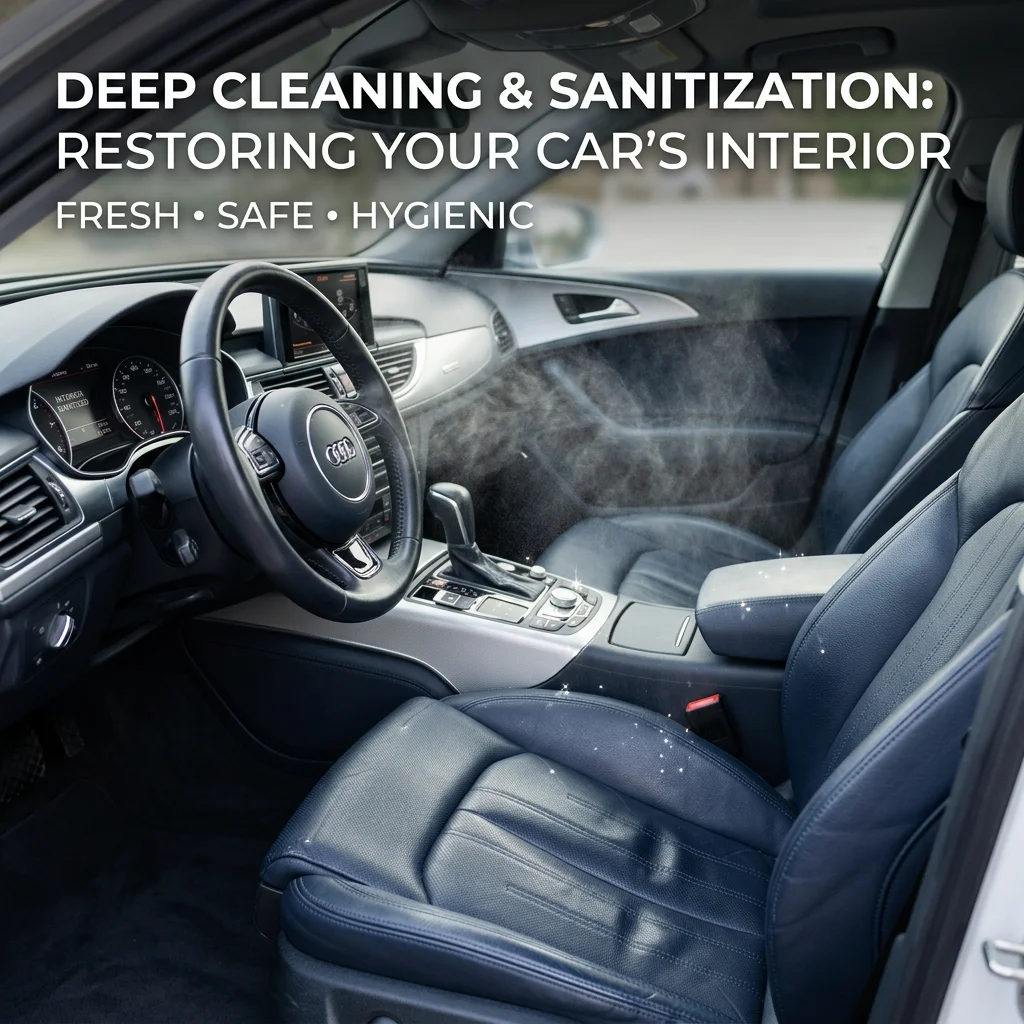
Most car owners notice the smell first. A stale, musty odour that wasn't there before the rains started — faint at first, then persistent, then strong enough that keeping the windows down feels like the only option. By the time the smell is obvious, the damage to the fabric has already been happening for two to three weeks. Cloth car seats during monsoon are one of the most overlooked car care problems in India, partly because the deterioration is invisible until it's significant, and partly because the perceived solution — an air freshener — does nothing to address the actual cause.
This piece explains exactly what happens to cloth seats during India's monsoon, why it happens faster than most people expect, what the health implications are, and what actually works to prevent and fix the damage — so you can make a decision that protects both your car's interior and the health of everyone who rides in it.
Cloth car seat fabric is porous. Unlike leather or vinyl, which have a sealed surface, cloth has open fibres that absorb moisture from the surrounding environment. In normal Indian summer conditions, this is not a significant problem — the low ambient humidity means any absorbed moisture evaporates relatively quickly. During monsoon, with relative humidity consistently above 80 percent in most cities, the fabric absorbs moisture faster than it can release it.
Within this moisture-saturated fabric, mould and mildew find everything they need to grow: moisture, warmth from the closed car cabin, and organic matter — skin cells, food particles, sweat residue, and dust — embedded in the fabric from weeks of normal use. Mould colonies establish in fabric within 24 to 48 hours of sustained dampness. The initial growth is microscopic and produces no visible sign, but it generates the musty smell immediately as a byproduct of its metabolic activity. By the time you can see discolouration or dark patches on the seat fabric, the colony has been active for one to two weeks and has penetrated several millimetres into the fibre structure — not just sitting on the surface.
This distinction matters enormously for cleaning. Surface sprays and wipes reach only the outermost layer of the fabric. They may suppress the smell briefly by killing surface growth, but the colony continues below the surface and regenerates within a week or two. This is why the same seats smell again shortly after a DIY spray-and-wipe cleaning — the problem was treated at the surface, not at the root.
Stage one — moisture absorption (days 1 to 7): The seat fabric reaches saturation point due to ambient humidity, condensation from the AC temperature differential, and direct moisture from wet clothing. The car smells slightly stale. No visible change to the fabric. The seat feels slightly damp to the touch. Most car owners at this stage assume a dry day or two will fix it — which it would if the humidity stayed low, but it will not for the next three months.
Stage two — mould establishment (days 7 to 21): Mould colonies are established in the fabric fibres. The musty smell is persistent and noticeable immediately when you open the car door. The AC fan, when running, circulates the spore-laden air through the entire cabin. Some car owners notice increased sneezing, throat irritation, or headaches during commutes at this stage without connecting the cause. The fabric surface may still look normal, or there may be faint discolouration near seam lines where moisture concentrates.
Stage three — fabric degradation (beyond 3 weeks): Prolonged mould growth weakens the fabric fibres through enzymatic breakdown. The seat may show visible dark patches or whitish mould growth. The odour has become embedded in the foam padding beneath the fabric — which is significantly harder and more expensive to address because it requires removing the seat cover to treat the foam separately. At this stage, the seat may require professional interior deep cleaning with foam extraction rather than just surface treatment.
Most car owners turn the AC on full blast in monsoon to deal with the heat and fogged windows — which is the right instinct for visibility, but it creates a specific problem for cloth seats. The AC evaporator coil inside the dashboard operates at a significantly lower temperature than the humid cabin air. When warm, moisture-laden air passes over the cold evaporator, moisture condenses on it — which is the AC's dehumidifying function. The condensation collects in a drain pan and exits the car through a drain pipe.
The problem is that the evaporator coil, drain pan, and the air ducts are themselves damp for extended periods. In a car that already has mould growing on its seats, the AC fan draws spores off the seats, some of which settle on the damp evaporator and begin growing there. The AC then becomes a mould distribution system, blowing spore-laden air across the entire cabin on every subsequent use. This is the reason that cars with mould on the seats often simultaneously develop the characteristic sour smell that comes from the vents when the AC first switches on — the two problems are connected and feeding each other.
Our detailed post on why car AC smells bad during monsoon and how to fix it covers the evaporator side of this problem in full — including what the correct vent sanitisation process involves and why cabin air filter replacement is a necessary part of monsoon AC care.
In North India's monsoon — whether in Dehradun with its intense hill-rain events or in the Delhi NCR corridor with its flat-road flooding and long commutes — getting into your car with wet clothing is unavoidable. A wet shirt, wet trousers, and a damp bag introduce direct liquid moisture into the seat fabric, not just ambient humidity. The seat absorbs this instantly. In a closed car parked in direct sun, the interior temperature rises to 50-60°C within minutes — which accelerates evaporation but also creates the warm, moist conditions inside the foam padding that mould thrives in.
The practical implication: keeping a dry towel in the car to sit on before getting in with wet clothing, and cracking windows slightly when the car is parked in a covered area (not in rain), are two of the most effective low-effort habits that reduce the rate of moisture accumulation in the seats. Neither eliminates the problem entirely — the ambient humidity is still present — but they reduce the severity of Stage one accumulation enough to buy meaningful time before professional cleaning is needed.
The correct tool for established mould in cloth seats is a hot-water extractor — a machine that injects a heated cleaning solution into the fabric under pressure, agitates the fibres to release the mould colony and embedded contamination, and then immediately extracts the dirty solution using powerful suction. The heat of the solution (typically 60-80°C) kills mould at the root rather than suppressing it at the surface. The extraction removes the dead colony along with the moisture, leaving the fabric dry within a few hours rather than re-saturating it as a spray-and-wipe would.
This is what Carmaa's professional interior deep cleaning service uses — hot-water extraction across seats, carpets, and door panels, followed by a targeted anti-microbial treatment on the foam padding through the fabric. The service also covers the dashboard and air vents, addressing the AC-mould connection in the same visit. Because the service is doorstep, there is no need to drive to a workshop or leave the car for a day — the technician comes to your apartment parking or office parking and completes the work there.
Surface sprays sold as "car fabric cleaners" or "seat fresheners" work on light soiling and early-stage odour, but they are not designed to penetrate the foam layer. They also re-introduce moisture into the fabric during application, which — without proper extraction — extends the drying time and can worsen the mould condition if not dried properly afterwards. For Stage one (first week of dampness, mild smell), a spray treatment with a proper dry microfibre wipe-down can manage the problem. For Stage two and beyond, extraction is the only approach that actually resolves the issue rather than managing it.
Keep a silica gel dehumidifier in the car. The reusable silica gel bags sold for car interiors absorb significant ambient moisture from the cabin air. Placed under the front seat or in the footwell, they reduce the relative humidity inside the car enough to slow mould growth between professional cleaning sessions. Recharge them in an oven once they saturate (colour-change indicator versions make this easy to track).
Run the AC on recirculation mode less. Recirculation mode recirculates cabin air — which, during monsoon, is already humid and potentially spore-laden. Switching to fresh air intake mode, even briefly before turning the AC off, helps flush the cabin with outside air and reduce the concentration of spores and humidity inside. Do this for the last five minutes of every commute before parking.
Use seat covers. A removable fabric or neoprene seat cover creates a washable barrier between the occupant and the seat fabric. The cover absorbs the direct moisture from wet clothing; the seat fabric beneath stays drier. The cover can be removed and washed at home. This is the highest-value low-cost intervention for cloth seats during monsoon — a ₹500-800 pair of universal seat covers prevents most Stage-one moisture accumulation.
Schedule professional interior cleaning once during the season. Even with good habits, the ambient humidity of four months of Indian monsoon will work some moisture into the seat fabric. One professional deep cleaning mid-monsoon — rather than waiting until the smell becomes a problem — resets the fabric condition and prevents Stage two and Stage three damage from establishing. Our guide on monsoon humidity and car interior mould covers the full picture of interior protection for the season, including dashboard care and floor mat maintenance.
The smell is mould growing inside the fabric fibres — not on the surface. Surface sprays mask it briefly but the colony continues below. A professional interior deep cleaning using a hot-water extractor is the only method that reaches into the fabric and foam padding to remove the mould at the root. After cleaning, keeping silica gel dehumidifier bags in the cabin and cracking windows slightly when parked in a covered area prevents recurrence through the rest of the season.
Yes. Mould on seats releases spores that become airborne when disturbed — by sitting, shifting position, or the AC fan running. In a sealed car cabin, you inhale these spores directly with nowhere for them to go. Common effects include throat irritation, nasal congestion, and worsened asthma or allergy symptoms. People who commute daily in mould-affected cars have sustained, repeated spore exposure that is more significant than occasional exposure in better-ventilated spaces. Car interior mould is a genuine health risk, not just a nuisance.
Yes — in both directions. Mould on seats releases spores that settle on the damp AC evaporator and grow there. The AC then blows spores from the evaporator across the cabin onto the seats, accelerating growth. This is why interior cleaning and AC vent sanitisation should be done together — fixing one without the other leaves the contamination source active and the problem returns quickly.
A complete interior deep cleaning including seats, carpets, and door panels takes two to three hours. Seats need one to two additional hours to dry after hot-water extraction. The car is usable within three to four hours of the service starting. Carmaa does this at your doorstep — the technician brings the machine and solution to your parking spot, so there is no need to visit a workshop or leave the car for a full day.
Related Blogs
Monsoon Humidity and Car Interior Mould
Why Car AC Smells Bad — How to Fix It
5 Signs Your Car Needs Interior Deep Cleaning
Benefits of Steam Cleaning Car Interior
Car Body Polish During Monsoon


