Interior Car Cleaning Mistakes That Are Damaging Your Car
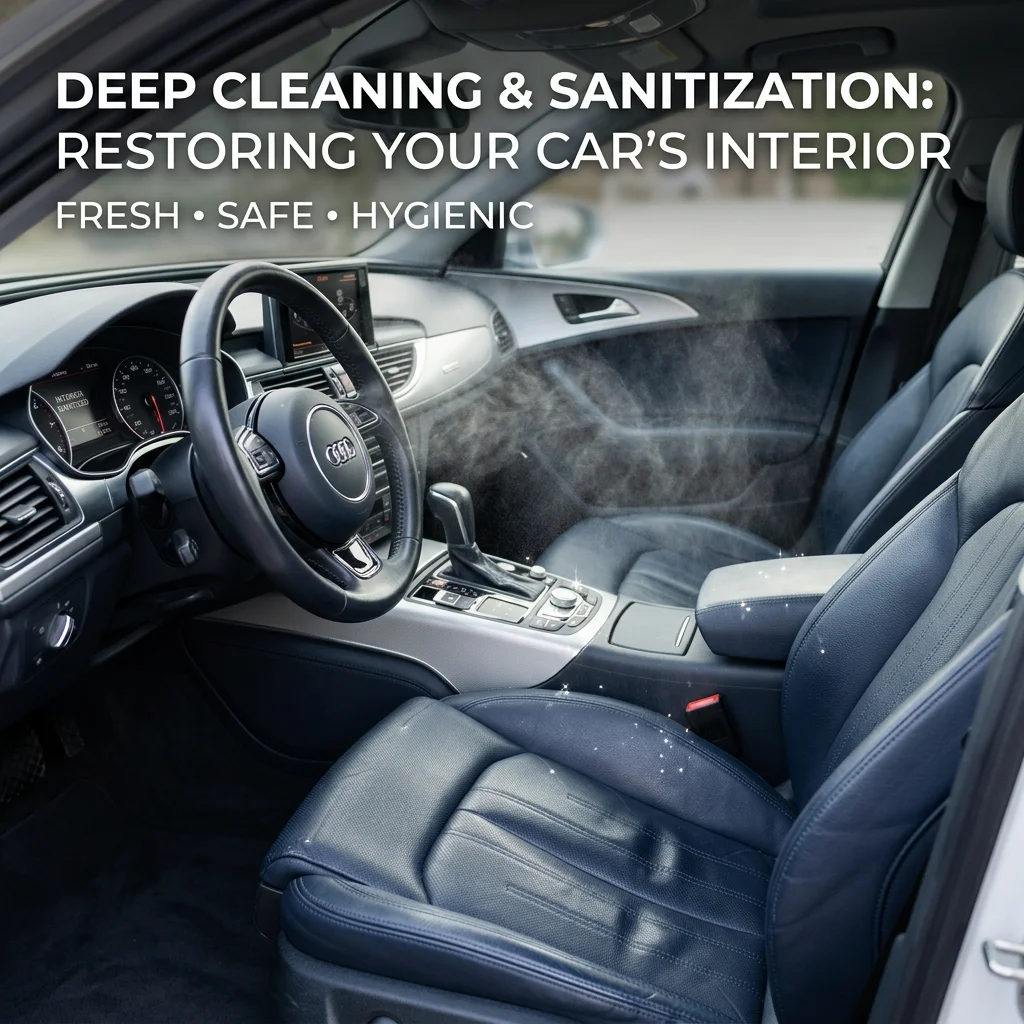
Interior cleaning is one of those things where people assume that because they're not using harsh chemicals or a pressure washer, they can't really go wrong. That assumption is what causes most of the damage. The truth is, the inside of your car is filled with materials — leather, fabric, vinyl, soft-touch plastics, wiring — that react very differently to different cleaning methods. Using the wrong product or technique on even one of them can cause irreversible damage.
These are the most common interior cleaning mistakes we see, explained in plain terms, along with what you should actually be doing instead.
Standard glass cleaners — the blue ammonia-based sprays you find at any supermarket — are fantastic on your windows. On your dashboard, they're a slow disaster. Ammonia degrades plastic and vinyl over time, stripping the UV protection layer and causing the surface to become brittle, cracked, and discoloured. The fading you see on older dashboards is often accelerated by years of cleaning with the wrong product.
Use a dedicated interior cleaner for all dashboard surfaces. It's pH neutral, won't affect the coating, and won't leave a greasy film that causes glare on your windscreen when sunlight hits the dashboard at a low angle — which is a genuine driving hazard.
Leather looks tough. It isn't. Saturating leather with water causes it to absorb moisture deep into its fibres. When it dries, it contracts and stiffens. Over time, this repeated wet-dry cycle is what causes leather seats to crack and peel — not age alone. If you've ever seen a car with leather that looks like a dried riverbed, excessive water during cleaning is usually part of the story.
For leather, use a dedicated leather cleaner applied to a microfiber cloth, not directly to the seat. Work in small sections, and always follow up with a leather conditioner to restore the moisture that the cleaning process removes. Think of conditioning leather the same way you'd moisturise dry skin — skip it once and it's fine, skip it consistently and you'll see the consequences.
The standard hard plastic nozzle on a household vacuum is not designed for car interiors. When you drag it across fabric seats or carpet, the hard edges create friction that wears down the fibres. On seat stitching and piping — the decorative borders of your car seats — it's even worse. That stitching is often the first thing to loosen and fray on a car that gets cleaned aggressively.
Use a soft brush attachment for seats and carpets. For crevices and the gaps between seat cushions, use a narrow flexible nozzle rather than pressing the hard nozzle into the gap with force. The goal is suction, not pressure.
This one makes us wince every time. Spraying any liquid — even a gentle interior cleaner — directly onto or near your instrument cluster is asking for a repair bill. The cluster contains sensors, switches, and circuit boards directly behind the display. Any liquid that seeps through the gaps can short these components, and car electronics are expensive to replace.
Always spray your cloth, not the surface. This applies everywhere near electronics — the infotainment screen, the instrument cluster, the climate control buttons, and the steering wheel controls. A lightly damp cloth gives you full control over exactly where the moisture goes.
Using the same cloth on your dashboard, then your seats, then your windows is one of the most efficient ways to spread contamination throughout your interior. The grime from your dashboard ends up on your seats. The product residue from your leather conditioner ends up on your glass, leaving smears. Different surfaces require different cloths — and used cloths should be set aside immediately so you don't accidentally pick up the wrong one.
A good interior cleaning kit has at minimum three dedicated cloths: one for hard surfaces, one for glass, and one for seats. Using them consistently means each surface gets cleaned rather than just redistributed with someone else's grime.
A coffee spill on a fabric seat triggers the immediate instinct to scrub. Don't. Scrubbing a stain pushes it deeper into the fibres, spreads it wider, and if the fabric has a directional pile, it permanently distorts the texture leaving a patch that looks different from the rest of the seat even after it's technically clean.
The correct method is to blot. Press a clean cloth onto the stain and lift straight up, repeatedly, from the outside edge of the stain inward. This draws the liquid up into the cloth rather than pushing it down into the fabric. A dedicated upholstery cleaner applied before blotting loosens the stain for easier removal.
Some people spray an interior cleaner, do a quick wipe, and consider the job done. The residue left behind from the product itself — especially if you've used too much — attracts dust faster than the original dirt did. The interior ends up looking dusty within days of cleaning, not because of the environment but because of how the cleaning was done.
After applying any product, wipe it off completely with a dry or lightly damp second cloth. You should be removing the product along with the dirt, not leaving it behind on the surface. A clean surface after cleaning should feel dry to the touch, not slightly tacky or slippery.
Cleaning your car's interior when the cabin is hot from sitting in the sun creates two problems. First, most interior cleaning products are designed to dwell on the surface for a moment before you wipe them off. In a hot car, they evaporate almost instantly, leaving behind concentrated residue that streaks and dries in patches. Second, the heat makes plastic and vinyl surfaces slightly more reactive to chemicals — meaning the same product that's safe on a cool car can cause discolouration when applied in a hot one.
Park in shade for at least 20 minutes before cleaning the interior, or open the doors to let the hot air out. A cooler cabin means products work as intended and surfaces respond predictably.
Regular light cleaning between professional sessions is always a good idea. But deep staining on fabric, leather that has already cracked, or interiors with mould from water ingress are situations where DIY methods will either fail to fix the problem or make it worse. At Carmaa, our interior detailing service is specifically designed for the Indian climate — high humidity, dusty roads, and the kind of grime that a monthly wipe-down simply can't reach.
Knowing what not to do is at least half of knowing how to do it properly. Avoid these mistakes, and your car's interior will stay in significantly better shape for significantly longer.
Protect your car's cabin from heat and bacteria. Book our premium interior cleaning service today. Let our experts handle it at your doorstep.
Related Guides
How to Clean Your Car Interior at Home Like a Pro
The Science of Interior Dry Cleaning & Sanitization
Interior Care & Removing Hard Water Stains


