How to Protect Your Car in Basement Parking
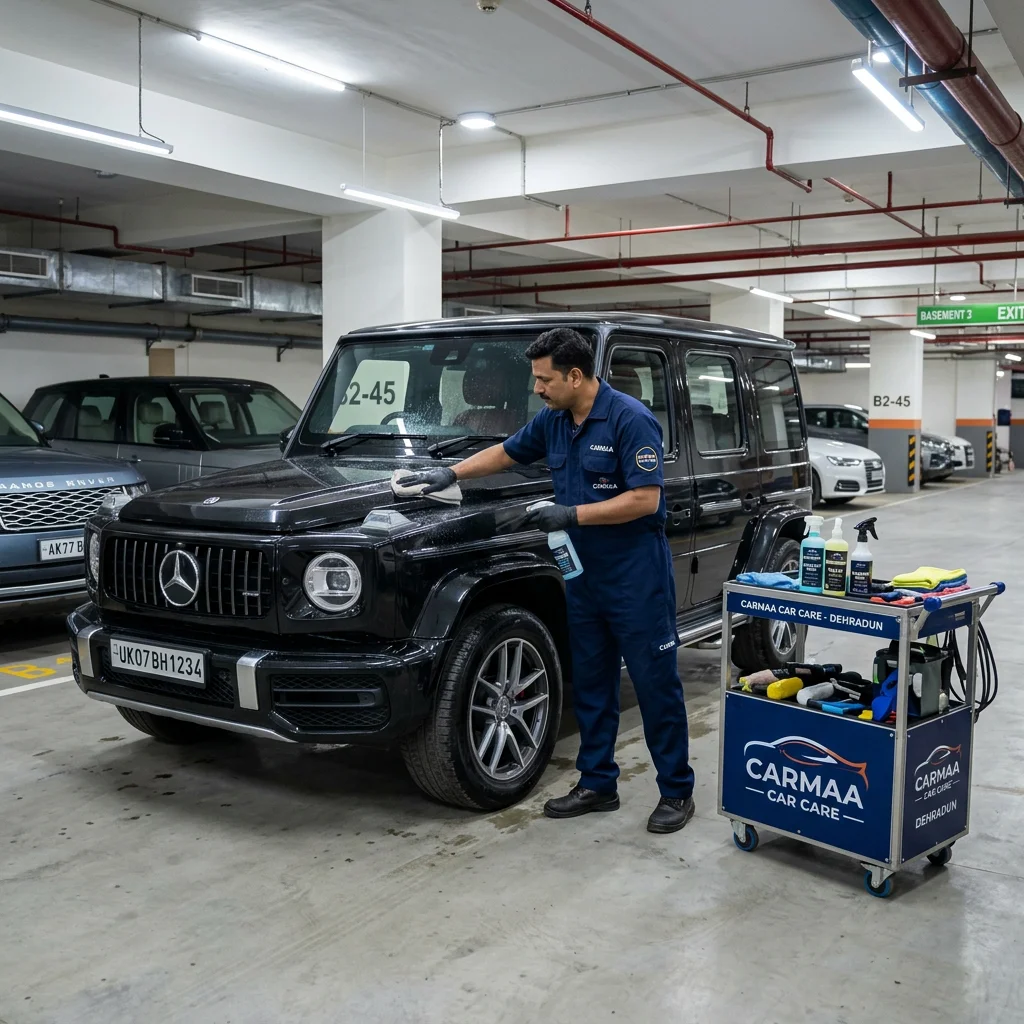
If you live in an apartment in Dehradun — especially in areas like Rajpur, Vasant Vihar, or the IT Park colony — your car probably lives in a basement or covered parking lot. Most people assume this is ideal: no sun, no rain, no problem. But basement parking comes with its own set of hidden threats that most car owners don't think about until the damage is already done.
Here's a complete guide to keeping your car in great shape, even when it's parked indoors.
Before we talk about solutions, let's understand what's actually happening in that basement:
One of the best habits you can develop is to give your car a quick wipe-down with a microfiber cloth before parking it after rain. Parking a wet car in a low-ventilation basement is the fastest way to invite rust and mold. Pay particular attention to the door seals, where water tends to pool and stay.
Vacuum the carpets and seats at least twice a month. Don't leave wet umbrellas, rain-soaked jackets, or wet bags in the car overnight. The moisture from these items evaporates into the cabin air, raises the humidity inside the car, and directly feeds mold growth in the seat fabric. A good rule: if it's wet, it comes out of the car.
A good quality, breathable indoor car cover does two things: it keeps the concrete dust off your paint, and it acts as a moisture barrier between your car's surface and the ambient humidity. Make sure the cover is designed for indoor use — outdoor covers are typically not breathable enough for enclosed spaces and can trap moisture against the paint, causing more harm than good.
The underbody of your car is the most vulnerable part in a basement environment. The combination of moisture from the floor and any rainwater that drips off when you park means the undercarriage is almost always damp. An annual underbody anti-rust treatment significantly slows down the oxidation process. Some garages also coat the underbody with a rubberized spray for long-term protection.
If your car sits in the same spot for days at a time (common on weekends for those who WFH), make it a habit to move it at least once every 2-3 days. This prevents flat spots on the tires and also ensures that the brakes don't seize — a subtle rust build-up on disc rotors can cause slight juddering if the car is left completely stationary for too long.
A hydrophobic paint sealant or wax creates a barrier between your paint and the alkaline concrete dust. When you do wipe the car down, the dust doesn't bond to the paint — it sits on top of the protective layer and wipes away cleanly. A Ceramic Coating is the most durable form of this protection, lasting 2-3 years with minimal maintenance.
The good news for basement parkers is that this is literally where Carmaa's doorstep service shines the most. Our waterless method doesn't require running water or drains, which makes us perfect for apartment parking lots. A professional interior deep-clean every month or two, combined with our exterior maintenance service, keeps basement-parked cars looking and smelling genuinely fresh year-round.
Don't assume that being parked indoors means your car is protected. Stay proactive, and your car will be in far better shape than many that park outdoors.
Give your car the care it deserves without leaving your home. Book our signature doorstep car wash today. Let our experts handle it at your doorstep.
Related Guides
Can Carmaa Wash in Basement Parking?
How to Clean Car Interior at Home
Monsoon Car Care Guide for Dehradun


