Table of Contents
The Quest for the Perfect Shine
Have you ever looked at your car under direct sunlight or a streetlamp at night and noticed a web of fine, circular scratches covering the paint? These are known as "swirl marks," and they are the primary reason a car's paint looks dull, faded, and aged over time. To fix this, you don't need a new paint job—you need Paint Correction.
What Exactly is Paint Correction?
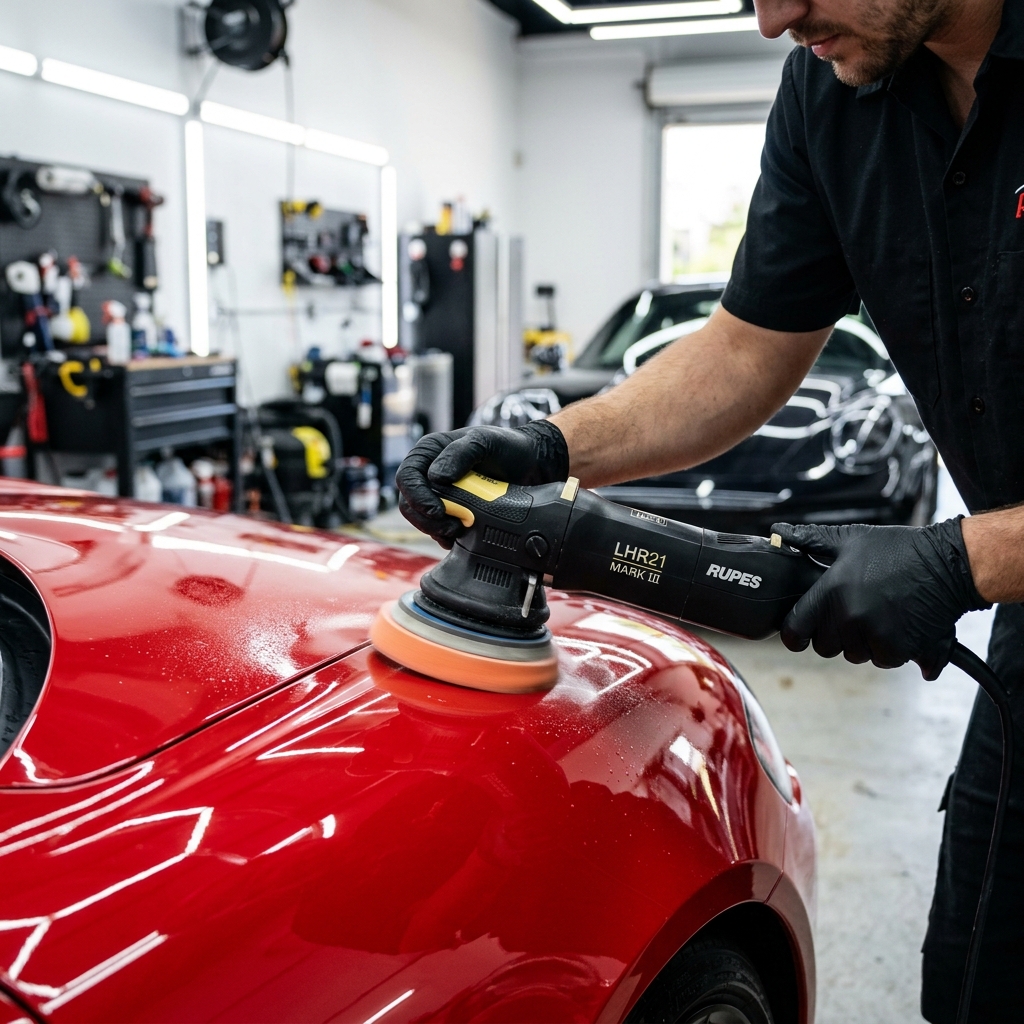
Paint correction is the mechanical process of leveling the clear coat of a vehicle's paintwork to remove surface imperfections such as swirl marks, fine scratches, water spots, bird dropping etching, and oxidation. It is vastly different from "waxing," which merely fills in minor scratches temporarily.
By using precision machine polishers, specialized abrasive compounds, and polishing pads, a professional detailer literally shaves off a microscopic layer of the clear coat (usually just a few microns) to make the surface perfectly flat. When the surface is flat, light reflects perfectly, creating a mirror-like finish.
The Stages of Paint Correction
Depending on the severity of the damage, paint correction is usually broken down into stages:
- Stage 1 (One-Step Polish): Ideal for cars with very light swirl marks or newer vehicles. A single polishing step is performed using a light abrasive polish and a finishing pad to restore gloss and remove roughly 50-60% of minor defects.
- Stage 2 (Two-Step Correction): This is the most common service for used cars. Step one involves a heavy cutting compound to remove 80-90% of moderate scratches. Step two utilizes a fine polish to refine the finish and remove any haze left behind by the aggressive cutting step.
- Stage 3 (Multi-Step Correction & Wet Sanding): Reserved for heavily neglected vehicles with deep scratches or "orange peel." This may involve wet sanding the clear coat before compounding and polishing. It is a highly specialized skill that requires significant time and precision.
Why You Need Paint Protection Afterward
After undergoing paint correction, your clear coat is essentially "naked." It looks beautiful, but it is highly vulnerable to the elements. It is strictly recommended to apply a high-quality Ceramic Coating or Paint Protection Film (PPF) immediately after correction to lock in that flawless finish and protect the remaining clear coat for years to come.
Frequently Asked Questions
Maintain Your Shine Effortlessly
Don't let the Indian dust dull your asset. Schedule a recurring weekly wash with Carmaa and keep your car showroom-ready all year round.
See Our PlansNeed Professional Car Care? Contact Us!
Phone: +91-70425 55401
Email: support@carmaacarcare.com
Address: Tea Estate Banjarawala, Kedarpur, Dehradun
